Why Choose 430 Stainless Steel Strips for Your Projects?
When considering materials for your projects, "430 Stainless Steel Strips" stand out due to their unique properties. John Smith, a renowned expert in materials engineering, once noted, "Choosing the right stainless steel is crucial for durability and performance." This insight highlights the significance of selecting quality materials, especially in demanding applications.
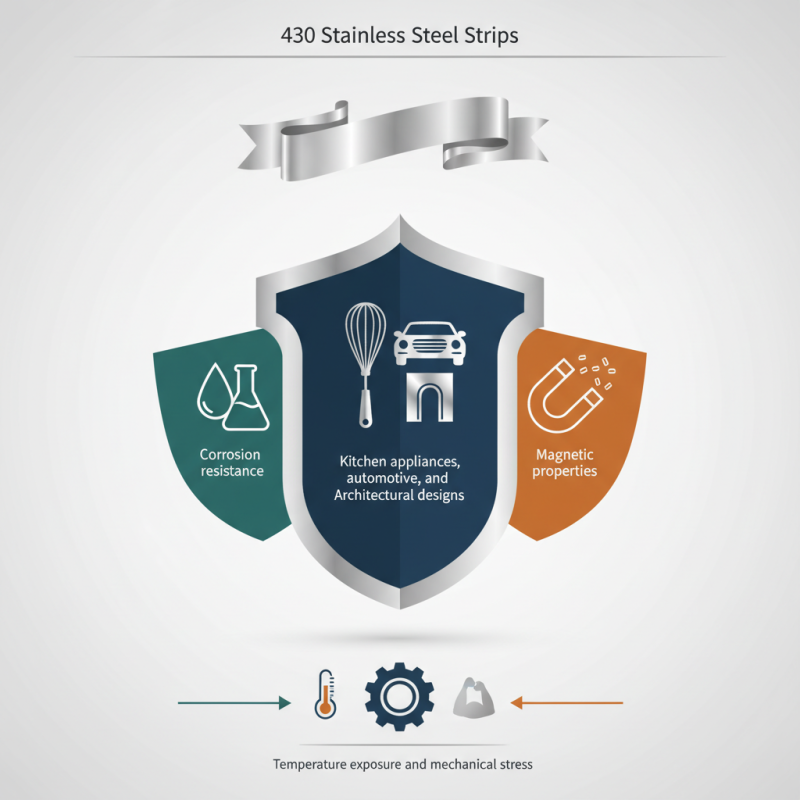
430 Stainless Steel Strips are known for their excellent corrosion resistance and aesthetic appeal. They are often used in kitchen appliances, automotive parts, and architectural designs. Their magnetic properties make them versatile for various applications, yet many overlook these advantages. While they offer robust performance, it's essential to evaluate how they meet specific project needs.
In an industry that continuously evolves, not all grades of stainless steel meet the high standards required today. Users must consider factors like temperature exposure and mechanical stress. Relying solely on general knowledge or assumptions can lead to costly mistakes. The choice of using 430 Stainless Steel Strips can greatly impact the project's overall success when informed decisions are made.
The Composition and Properties of 430 Stainless Steel
430 stainless steel is a popular choice for various applications due to its unique composition. This type of stainless steel contains approximately 16-18% chromium and about 0.12% carbon. The chromium content gives it excellent corrosion resistance, making it suitable for environments prone to oxidation. However, it lacks the nickel found in other stainless steels, which can limit its ability to withstand extreme conditions.
The properties of 430 stainless steel strips contribute to their versatility. They have good formability and are easy to weld, allowing manufacturers to create intricate designs. Despite these advantages, they can be less durable than other alloys when exposed to harsh chemicals or high temperatures. Therefore, it's essential to assess the specific needs of your project before selecting this material.
Many projects benefit from the attractive finish of 430 stainless steel. Its bright and shiny appearance makes it ideal for decorative applications. However, the surface can show fingerprints, which may require additional maintenance. Understanding these characteristics will help you make informed decisions when choosing materials for your projects.
Applications of 430 Stainless Steel Strips in Various Industries
430 stainless steel strips are versatile and widely used across various industries. Their unique properties make them ideal for many applications. With an attractive balance of strength, resistance to corrosion, and affordability, these strips meet diverse demands.
In the automotive sector, 430 stainless steel strips are frequently used for trim and decorative finishes. They add aesthetic value while ensuring durability against environmental damage. Similarly, in the appliance industry, these strips are often found in kitchen equipment and decorative components. Their ability to withstand heat and moisture extends the life of appliances.
The construction industry also benefits from 430 stainless steel. This material is used in architectural applications, such as wall panels and railings. However, some engineers ponder if the finish quality meets their high standards. While 430 stainless steel offers many advantages, it is essential to evaluate specific project requirements. Balancing cost-effectiveness and performance can sometimes be challenging.
Applications of 430 Stainless Steel Strips in Various Industries
Advantages of Using 430 Stainless Steel for Manufacturing Projects
When considering materials for manufacturing projects, 430 stainless steel strips stand out for their unique benefits. This alloy offers excellent corrosion resistance, making it suitable for environments where moisture is a concern. Its magnetic properties also enable easier handling during manufacturing and assembly processes. Additionally, 430 stainless steel can be more economical compared to other stainless steel grades, providing a reliable yet cost-effective option.
Tips: When working with 430 stainless steel, ensure proper handling to avoid surface scratches. Use protective gear and tools that minimize wear. Test small samples first to gauge performance in your specific application.
The ease of fabrication is another advantage of 430 stainless steel. It can be easily formed, cut, and welded, allowing for quick adjustments. This flexibility can save time on production schedules. However, keep in mind that while 430 stainless steel is strong, it may not have the same level of toughness as other grades in extreme conditions.
Tips: Always evaluate the environment where your project will be deployed. Conduct feasibility studies to assess how 430 stainless steel will perform under potential stressors. Rethink your design if necessary to enhance durability.
Comparison of 430 Stainless Steel with Other Stainless Steel Grades
When considering stainless steel for projects, 430 stainless steel strips stand out. They offer excellent corrosion resistance and formability. Comparing 430 to other grades, its affordability makes it a preferred choice for many applications. Unlike 304 stainless steel, 430 is more cost-effective and provides sufficient protection against oxidation and rust for non-critical environments.
However, 430 does have limitations. It is not as resistant to high temperatures compared to 316 stainless steel. This can impact its effectiveness in specific applications, like those exposed to extreme heat. It also lacks the same level of toughness and ductility found in other stainless steel grades. Projects requiring heavy-duty performance may find 430 unsuitable.
Despite these drawbacks, 430 stainless steel can be ideal for decorative and light-duty applications. Its magnetic properties can be beneficial in various contexts. Yet, it’s crucial to assess the specific demands of your project before making a final choice. Balancing cost and performance will lead to a more informed decision.
Why Choose 430 Stainless Steel Strips for Your Projects? - Comparison of 430 Stainless Steel with Other Stainless Steel Grades
| Property | 430 Stainless Steel | 304 Stainless Steel | 316 Stainless Steel |
| Corrosion Resistance | Moderate | Good | Excellent |
| Tensile Strength (MPa) | 450-650 | 520-720 | 580-760 |
| Ductility | Moderate | High | High |
| Weldability | Good | Excellent | Good |
| Cost | Low | Medium | High |
Maintenance and Care Tips for 430 Stainless Steel Strips
When working with 430 stainless steel strips, proper maintenance is crucial for longevity and durability. Cleaning the surface regularly helps prevent rust and stains. Use a soft cloth and mild detergent mixed with water. Avoid abrasive materials that could scratch the surface.
For those in humid environments, consider applying a protective coating. This can enhance resistance to corrosion. It's essential to check for any signs of wear or damage periodically. Small scratches may become larger without timely intervention. If rust does appear, use a fine-grit sandpaper to gently buff it out and restore the shine.
Storing 430 stainless steel strips is also important for their upkeep. Keep them in a dry area to avoid moisture buildup. Make sure they are not in direct contact with other materials that might cause scratches. Remember, even a small oversight in care can lead to bigger issues down the line. Taking these steps will ensure that your stainless steel strips remain in top condition for your projects.



 Close
Close