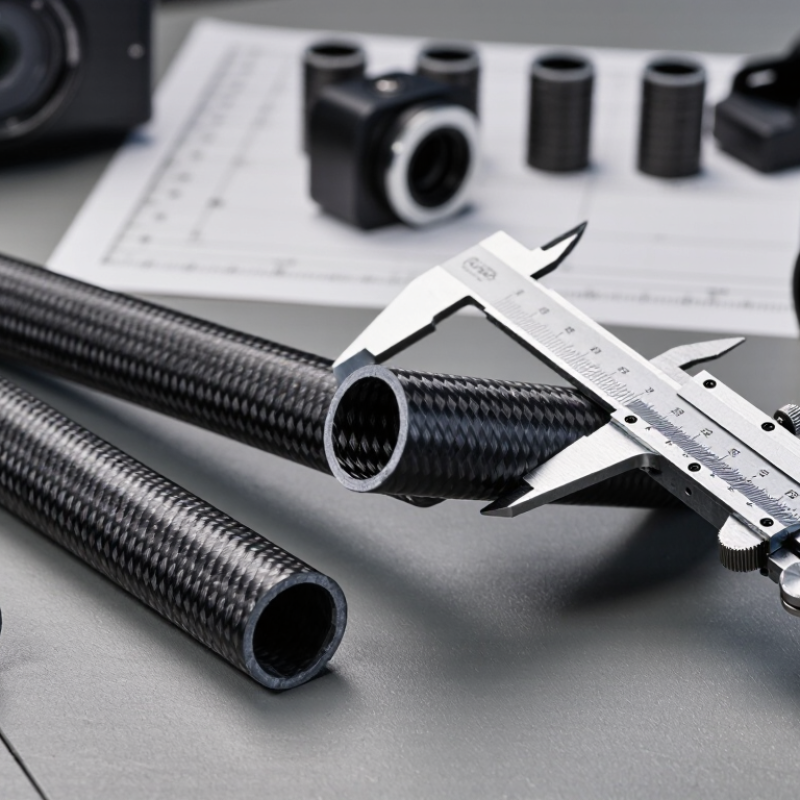
A carbon fiber tube performs best when its shape and fiber directions match the loads it will carry. A round tube suits many bending and torsion applications, while a rectangular or oval profile can provide useful stiffness along selected axes. Geometry matters. Increasing diameter can improve bending stiffness, but it may also affect fit, weight, and joint design.
Fiber layup shapes how the tube responds. Fibers running lengthwise, often called 0-degree plies, support axial loads and bending. Angled plies, commonly near ±45 degrees, help resist twisting. Circumferential fibers can improve hoop strength under radial pressure. A balanced layup is not automatically the right one. Not always. The best combination depends on load direction, support points, and how the tube connects to the rest of the assembly.
Start with realistic load cases, including vibration and impact if they are expected. Then compare tube dimensions and layup options with supplier data or engineering analysis. Check the finished part, too: cut edges, drilled holes, and clamped joints can create local stress concentrations. A calculation may look tidy, yet a prototype can reveal unexpected flex. Testing under representative conditions is worth the time, even when the first design seems obvious.



 Close