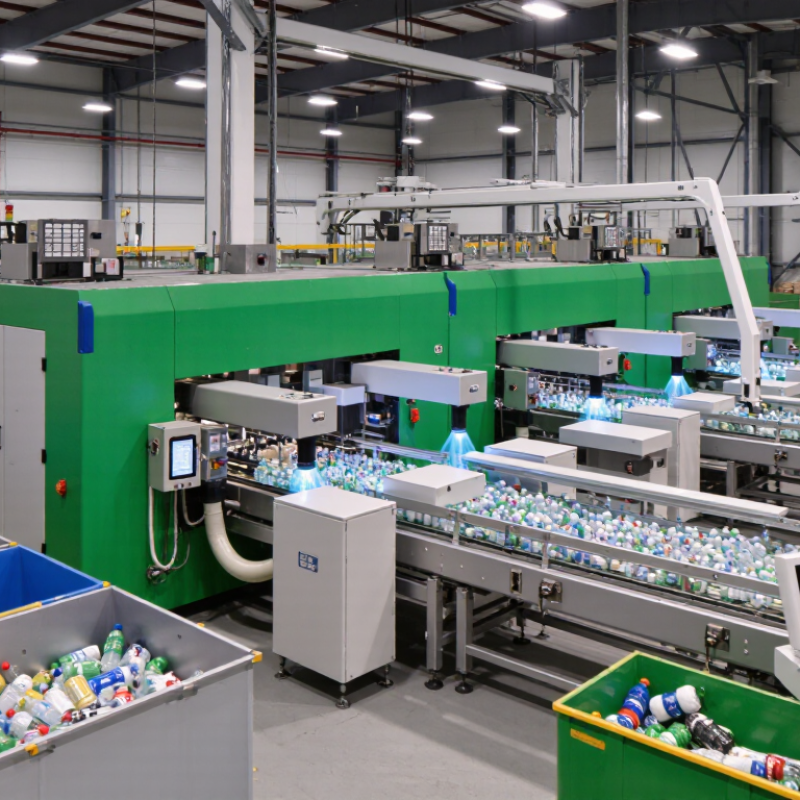
A green machine optical sorter can improve recovery without adding unnecessary manual handling. In a modern materials recovery facility, cameras and sensors identify color, shape, and polymer type. Air jets then separate selected items within milliseconds. This supports steadier throughput and more consistent product quality.
The World Bank’s What a Waste 2.0 report estimates global municipal waste could reach 3.4 billion tonnes annually by 2050. Better sorting capacity will matter. The OECD’s Global Plastics Outlook reports that only 9% of plastic waste was recycled globally in 2019. Optical sorting can remove unwanted items earlier, protect recyclable streams, and reduce landfill dependence. It can also lower repetitive labor demands and provide useful performance data.
However, the system is not magic. Dust, crushed containers, dark materials, and poor calibration can reduce accuracy. A machine may reject valuable material when settings are rushed. Operators still need training and regular quality checks.
Tips: Test representative material before purchasing. Measure recovery rate, purity, uptime, energy use, and maintenance hours. Review results across wet, dusty, and high-volume shifts. The U.S. Environmental Protection Agency reported a 32.1% municipal recycling and composting rate in 2018, showing that equipment alone cannot solve every process gap. Pair optical sorting with clear collection rules, routine sensor cleaning, and documented calibration. Small errors become expensive when they repeat every hour.



 Close