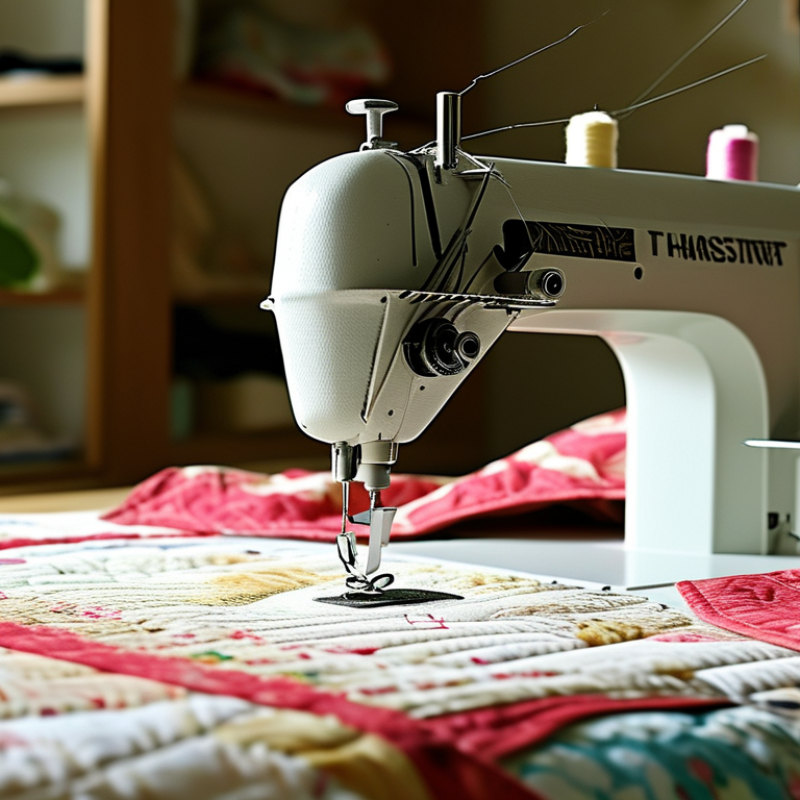
| Basic definition | A sewing machine configured for joining fabric layers with quilting stitches. | It may be a domestic sewing machine with quilting accessories or a dedicated home quilting machine. | It allows quilting work to be completed at home without industrial-scale equipment. |
| Main quilting structure | Quilting secures multiple textile layers together. | The standard quilt sandwich consists of a quilt top, batting or wadding, and a backing fabric. | Understanding the layers helps users choose suitable needles, thread, presser feet, and stitch settings. |
| How the stitch forms | The needle carries the upper thread through the fabric while the bobbin supplies the lower thread. | The upper and bobbin threads interlock to create a lockstitch, which holds the layers together. | Balanced upper-thread tension and bobbin tension help prevent loose loops and puckering. |
| Fabric feeding | Feed mechanisms move the fabric under the needle during stitching. | A walking foot helps feed several layers more evenly; free-motion quilting uses a lowered or covered feed-dog system and user-guided fabric movement. | Appropriate fabric control reduces shifting between the quilt top, batting, and backing. |
| Common stitch type | The stitch pattern determines the appearance and holding strength of the quilt. | Straight stitching is widely used for patchwork and walking-foot quilting; decorative and free-motion stitches are also common. | Different stitch types support both functional construction and surface decoration. |
| Typical stitch length | Stitch length is the distance between consecutive needle penetrations. | A straight quilting stitch commonly starts around 2.5–3.0 mm, with adjustments based on fabric, batting, thread, and design. | A suitable length helps maintain secure seams without creating excessive perforation or thread buildup. |
| Needle selection | The needle must suit the fabric weight and thread size. | Universal or quilting needles in approximately 75/11 to 90/14 sizes are commonly used for light- to medium-weight cotton layers; thicker projects may require a larger needle. | The correct needle reduces skipped stitches, thread breakage, fabric damage, and uneven holes. |
| Thread requirements | Thread weight and fiber influence stitch strength and appearance. | All-purpose polyester or cotton thread is commonly used; the upper and bobbin threads should be compatible in weight and tension. | Compatible thread reduces lint, breakage, tension problems, and visible inconsistency. |
| Throat space | Throat space is the area between the needle and the machine body. | Home machines generally have less workspace than long-arm quilting systems, so large quilts may need to be rolled or repositioned. | More available space makes it easier to manage bulky quilt sections and long quilting lines. |
| Speed control | Speed control determines how quickly the needle cycles. | A foot controller or adjustable speed setting enables slow stitching for corners and detailed free-motion work. | Controlled speed improves accuracy and makes the machine easier for beginners to handle. |
| Suitable materials | Material compatibility depends on machine clearance, needle system, and motor capacity. | Cotton, linen blends, lightweight denim, flannel, fleece, and selected batting materials may be suitable when the machine settings are adjusted correctly. | Testing on fabric scraps helps confirm feeding, tension, and needle compatibility before sewing the final project. |
| Typical applications | Home quilting machines support both decorative and practical textile projects. | Common projects include bed quilts, wall hangings, table runners, placemats, cushions, bags, baby quilts, and quilted garments. | A single machine can support household textiles, gifts, repairs, and creative projects. |
| Main advantages | The machine combines controlled stitching with home-scale flexibility. | Key benefits include lower space requirements than industrial equipment, adjustable stitch settings, reusable operation, and the ability to customize patterns and materials. | These features make home quilting practical for personal production and small projects. |
| Common limitations | Home machines have physical and operational limits. | Very thick layers, oversized quilts, continuous high-speed use, and highly specialized patterns may require a larger or specialized machine. | Knowing the limits helps prevent motor strain, uneven feeding, needle damage, and unnecessary fabric waste. |
| Basic operating sequence | Quilting follows a series of preparation and stitching steps. | Prepare the quilt sandwich, insert the correct needle, thread the upper path, load the bobbin, select the presser foot, test tension, and stitch while guiding the layers. | A consistent setup improves stitch quality and reduces troubleshooting during the project. |
| Maintenance | Routine care keeps the machine operating smoothly. | Remove lint from the bobbin area, change damaged or dull needles, keep the machine covered, and follow the equipment manual for lubrication and service intervals. | Regular maintenance supports reliable feeding, stable tension, and longer service life. |



 Close
Close