Why Choose a Hydraulic Hand Pump for Your Needs?
Choosing the right equipment for hydraulic applications is crucial. The Hydraulic Hand Pump stands out as a versatile tool. According to industry reports, the hydraulic equipment market reached $58 billion in 2020. This growth highlights the demand for reliable and efficient tools like hand pumps.
Hydraulic hand pumps offer portability and ease of use. Their compact design allows users to operate them in tight spaces. A study from the Fluid Power Journal notes that 40% of operators prefer hydraulic hand pumps for outdoor tasks. However, not every pump is suitable for all tasks. Users must consider pressure ratings and fluid compatibility.
Despite their advantages, hydraulic hand pumps can be overlooked. Some users may not fully understand their potential. A survey indicates that 30% of operators see them as secondary options. This misconception can limit project efficiency. Evaluating various pumps is essential for optimal performance.

Benefits of Using Hydraulic Hand Pumps in Various Applications
Hydraulic hand pumps offer versatile solutions in many industries. They provide excellent power-to-size ratios, making them efficient in tight spaces. Many users appreciate their durability and reliability. These pumps can handle various fluids, adapting to specific needs. They are particularly useful in construction, automotive, and manufacturing applications.
One significant benefit is ease of use. Hydraulic hand pumps are user-friendly and do not require electricity. This makes them perfect for outdoor tasks. They are simple to operate, even for those unfamiliar with hydraulic systems.
Tips: Always ensure proper maintenance. Regularly check for leaks or wear. This prevents unexpected failures. Another tip is to understand the load capacity. Overloading can lead to pump damage. Knowing specifications ensures safe operation.
Choosing a hydraulic hand pump should reflect your specific requirements. Consider your project’s scale and environment. Sometimes, it may feel overwhelming to pick the right model. Take time to research and ask for advice. Testing different pumps can provide valuable insights.
Why Choose a Hydraulic Hand Pump for Your Needs? - Benefits of Using Hydraulic Hand Pumps in Various Applications
| Application |
Benefits |
Pressure Output (psi) |
Weight (lbs) |
| Construction |
Portable, easy to operate, and efficient for heavy lifting. |
10,000 |
15 |
| Automotive Repair |
Ideal for lifting vehicles, carrying minimal weight. |
8,000 |
12 |
| Manufacturing |
Provides precise control in assembly processes. |
12,000 |
20 |
| Landscaping |
Efficient for pushing soil and lifting heavy elements. |
6,000 |
10 |
| Marine Applications |
Suitable for tight spaces and submerged conditions. |
9,000 |
18 |
Key Features to Look for in Hydraulic Hand Pumps
When selecting a hydraulic hand pump, certain key features can significantly enhance usability and performance. Efficiency is paramount. Look for a pump with a high flow rate. This means less effort and quicker results. A lightweight design can also reduce fatigue, especially during prolonged use. Ensure the pump has a comfortable grip. An ergonomic handle can make a big difference. It’s crucial for user experience.
Durability is another important factor. Choose pumps made from high-quality materials. Steel or aluminum options often stand out. They can withstand tough environments. Sealing systems are essential too. Look for models that prevent leaks. This not only protects your workspace but also improves efficiency. Compatibility with various hydraulic fluids can also expand the pump's versatility.
Cost is a consideration, but don’t compromise on quality. Sometimes lower-priced options can underperform. It’s necessary to balance price and performance. Reflect on your specific needs before deciding. A pump that excels in one area may fall short in another. Take time to evaluate different models. Each feature could impact your overall satisfaction.
Comparing Hydraulic Hand Pumps to Other Pump Types
When considering pump options, hydraulic hand pumps stand out for their efficiency. A study by the International Fluid Power Society shows that hydraulic systems offer about 70% energy efficiency compared to 30% for pneumatic systems. This high efficiency translates into lower operational costs over time. Hydraulic hand pumps can generate high-pressure outputs without requiring electrical energy, making them ideal for remote or power-less situations.
In contrast, electric pumps typically have higher maintenance costs. They require a reliable power source, and even minor electrical issues can lead to downtime. The National Institute of Standards and Technology reports that downtime can cost companies thousands of dollars per hour. Hydraulic hand pumps, on the other hand, allow for immediate use and require minimal upkeep, yet they still face challenges like limited flow rates and manual effort.
Another point to consider is safety. While hydraulic systems can handle high pressures, they can also pose risks if not maintained properly. Reports from the American Society of Mechanical Engineers highlight that improper use of hydraulic equipment can lead to severe injuries. Therefore, understanding the pros and cons of hydraulic hand pumps is crucial for making an informed decision tailored to specific needs.
Maintenance Tips for Maximizing Hydraulic Hand Pump Lifespan
Hydraulic hand pumps are reliable tools for various tasks. They require proper maintenance to ensure longevity and efficiency. To maximize their lifespan, follow these key tips.
Regularly inspect the pump for any signs of wear. Look for leaks, rust, or cracks. These issues can quickly compromise performance. Clean the pump after each use. Dirt and grime can accumulate, causing damage over time. Use a soft cloth and appropriate cleaning solution. Avoid aggressive scrubbing, as it may scratch surfaces.
Store the pump in a dry place. Humidity can lead to rust and deterioration. A simple protective cover can help. Check the hydraulic fluid levels regularly. Low fluid can lead to inefficient operation. If it gets contaminated, replace it promptly. Neglecting these details can lead to more serious problems. Mistakes happen, but learning from them is essential for maintenance success.
Selecting the Right Hydraulic Hand Pump for Specific Tasks
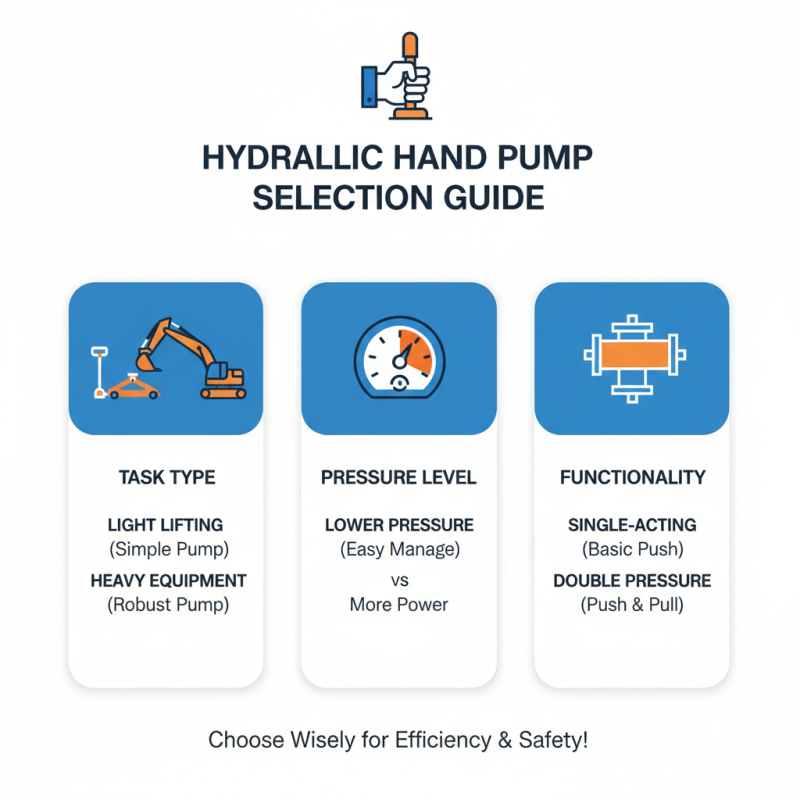
When selecting a hydraulic hand pump, consider the specific tasks you need it for. Different tasks require different functions. For light lifting, a simple pump might suffice. However, for heavy equipment, you’ll need a robust pump. Think about the pressure level too. Higher pressure means more power but can also be harder to manage.
Compatibility is critical. Ensure the pump fits your hydraulic system. Mismatched components lead to leaks and inefficiency. Take time to check the specifications. Some users forget to match the hydraulic fluid. Using the wrong fluid can damage both the pump and equipment. It’s a detail that is easy to overlook but can cost you.
Efficiency matters, but so does comfort. Manual operation requires strength, especially for large pumps. Consider the handle design. Is it comfortable? Does it provide enough leverage? Experience often teaches the best lessons here. A pump that is hard to use will slow you down. Breakdowns can occur if the pump is pushed beyond its limits. Being aware of operational limits ensures safety and longevity.



 Close
Close