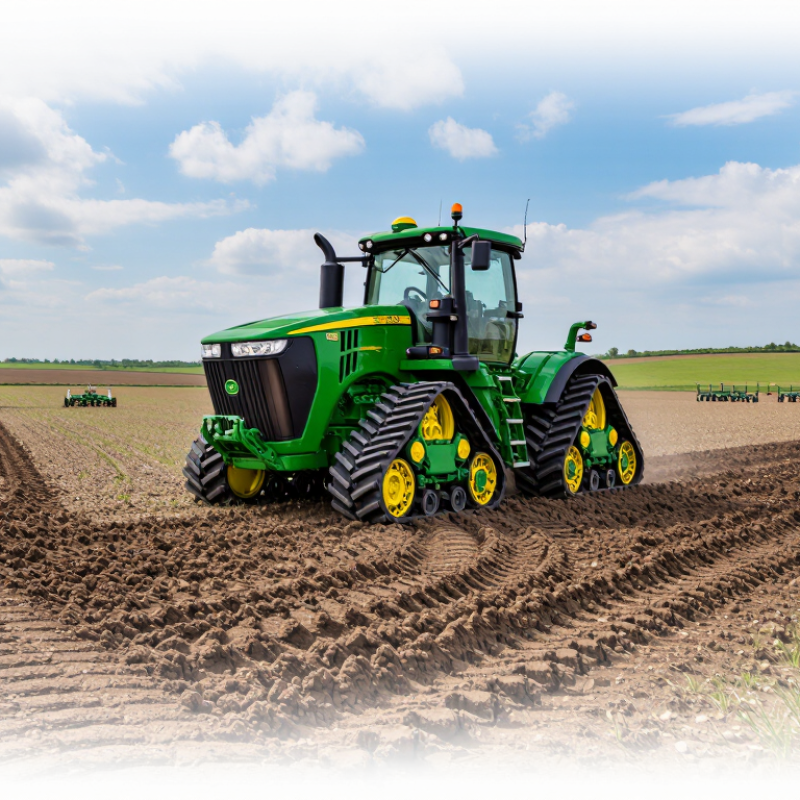
| Traction and slip | Tracks provide a long ground-contact area and can improve traction in soft or loose conditions. Actual performance depends on track design, soil, load, and setup. | Can provide strong traction on firm ground, especially with suitable tires, ballast, and tire pressure. | Consider the soil types, slopes, pulling loads, and frequency of work in wet or loose fields. |
| Ground pressure and compaction | The larger contact area can help distribute machine weight and reduce ground pressure, depending on machine weight and track configuration. | Tire pressure, tire size, axle load, and ballast all affect ground pressure and compaction risk. | Compare the complete machine setup and expected axle loads; track type alone does not determine compaction. |
| Ride and field comfort | Ride quality varies by undercarriage design, track tension, speed, and surface. Some configurations can feel firm on rough ground. | Pneumatic tires can absorb bumps, with ride comfort affected by tire pressure, speed, and suspension. | If long hours are spent on uneven ground, assess the cab, seat, suspension, and actual ride at working speeds. |
| Road travel | May have lower practical road speeds or additional restrictions depending on the machine and local regulations. Track wear can increase on abrasive surfaces. | Often well suited to frequent travel between fields and on public roads, subject to local rules and machine specifications. | Estimate road distance, travel frequency, permitted speeds, and any transport requirements. |
| Turning and headlands | Turning behavior depends on the steering system and track configuration. Tight turns can increase soil disturbance or track wear in some conditions. | Generally offers familiar steering and maneuverability; tight turns can still scuff soil or stress tires. | Consider field layout, headland width, crop sensitivity, and the turning method recommended by the manufacturer. |
| Maintenance and wear | Requires inspection of tracks, rollers, idlers, drive components, and correct track tension. Abrasive surfaces and improper tension can accelerate wear. | Requires tire-pressure checks and inspection for cuts, punctures, wear, and wheel or axle issues. | Compare maintenance intervals, local service availability, replacement-part access, and expected operating conditions. |
| Operating cost | Costs depend on purchase price, track life, undercarriage maintenance, fuel use, and the work performed. | Costs depend on purchase price, tire life, repairs, fuel use, and the work performed. | Use a total-cost estimate for your expected annual hours rather than comparing purchase price alone. |
| Best-fit conditions | Often worth considering for frequent work on soft soils, where traction and reduced ground pressure are priorities. | Often worth considering when road travel, versatility, and operation on firm surfaces are major priorities. | Match the configuration to your soils, implements, annual workload, travel needs, and service support. |



 Close