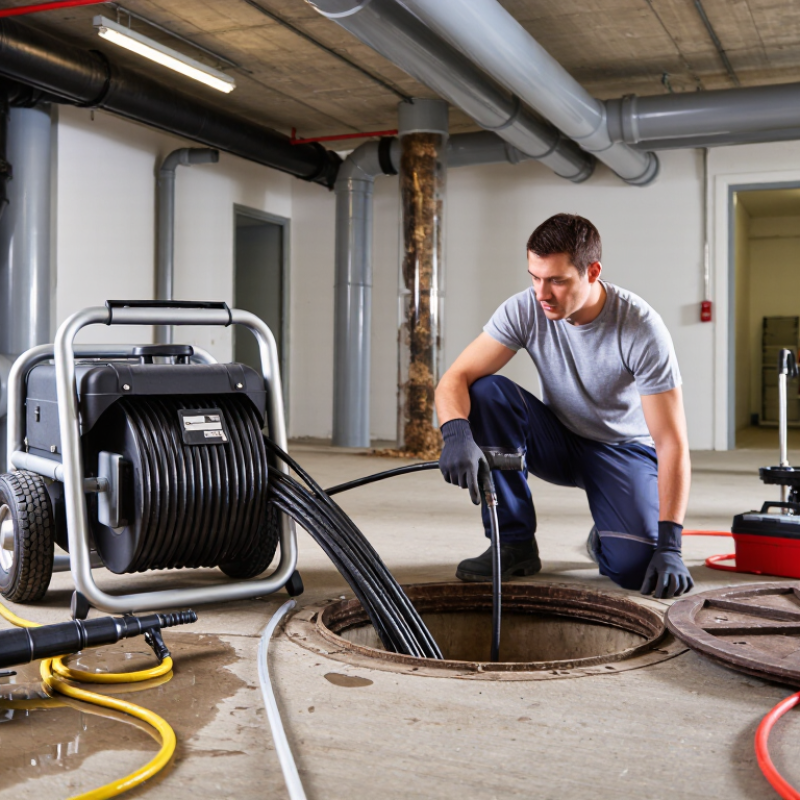
| Clears common blockages | Depending on the machine and attachment, rotating cables can break through obstructions, while water jetters use pressurized water to move debris and clean pipe walls. | Accumulated grease, soap residue, soft deposits, and other material that restricts flow. | The appropriate cable, nozzle, and cleaning method depend on the blockage and pipe condition. |
| Reaches farther into the line | Portable and truck-mounted equipment can feed cables or hoses through an accessible cleanout and into sections of pipe beyond the immediate fixture. | Drain and sewer lines with blockages located some distance from the access point. | Access points, pipe layout, bends, and equipment reach affect how much of the line can be serviced. |
| Removes buildup from pipe walls | Water jetting can direct streams along the inside of a pipe, helping dislodge certain deposits that a simple opening through a blockage may leave behind. | Suitable lines with grease, sediment, or residue adhering to the interior surface. | Jetting pressure and nozzle selection should be appropriate for the pipe material, condition, and diameter. |
| Offers different cleaning approaches | Mechanical drain machines and water jetters use different methods, allowing a technician to select equipment suited to the type of obstruction and job conditions. | Mechanical cables are commonly used for many localized obstructions; jetters can be useful for flushing certain loose debris and deposits. | No single machine is ideal for every blockage. Some situations require inspection or a different repair method. |
| Can reduce repeated manual effort | Powered equipment advances a cable or hose through a line, reducing reliance on hand tools for longer or more resistant cleaning tasks. | Recurring maintenance and service work on accessible drain and sewer lines. | Setup, operation, and cleanup still require trained handling and appropriate safety procedures. |
| Supports routine maintenance | Scheduled cleaning can remove certain accumulating material before it significantly restricts drainage. | Properties or systems where recurring grease, sediment, or debris buildup has been identified. | Cleaning frequency should be based on observed conditions and service history rather than a universal schedule. |
| Helps restore drainage flow | Removing or dislodging an obstruction can reopen the passage available for wastewater to flow through the pipe. | Slow drains or backed-up lines caused by a removable blockage. | If poor flow continues after cleaning, the line may have structural damage, a severe obstruction, or another underlying issue. |
| Can be paired with inspection | A sewer camera can be used separately to examine the line and help locate issues before or after cleaning. | Recurring blockages, suspected root intrusion, or lines where the cause is unclear. | A cleaning machine does not itself confirm the pipe’s structural condition; inspection may be needed for diagnosis. |



 Close