| Material handling | Moving resin, loading material, and monitoring supply to the molding machine. | Vacuum conveying, centralized material systems, and automated drying and feeding. | Can provide a more consistent material supply and reduce routine handling. | Material drying and handling requirements depend on the resin and must follow its processing guidance. |
| Mold setup and changeover | Connecting utilities, installing the mold, and entering process settings. | Quick mold-change equipment, automated clamp systems, and stored machine recipes. | Can make repeat changeovers more organized and reduce some setup steps. | Recipes and connections still need verification for the specific mold, machine, and material. |
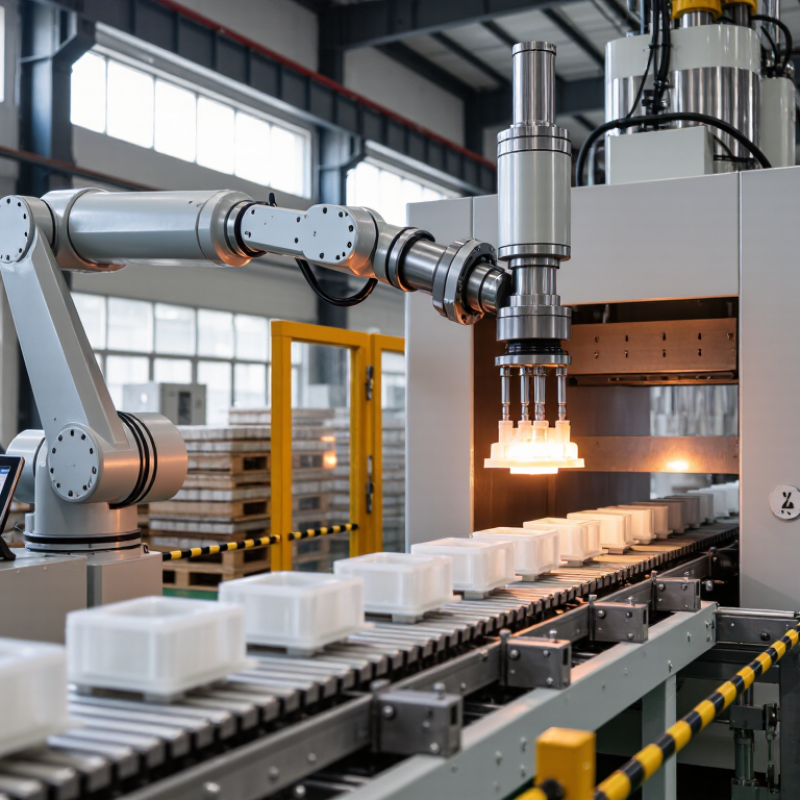
| Part removal | Removing molded parts from the mold area after each cycle. | Robots or sprue pickers remove parts or runners from the mold. | Can support repeatable removal and keep operators away from the mold area during automatic operation. | Robot reach, end-of-arm tooling, cycle timing, and machine safety interlocks must be properly engineered. |
| In-cycle inspection | Checking parts at intervals for visible defects or dimensional concerns. | Vision systems, sensors, or gauging equipment inspect selected part features. | Can identify certain detectable conditions consistently and flag parts for review or rejection. | Inspection capability depends on lighting, part presentation, measurement method, and validated acceptance criteria. |
| Secondary operations | Trimming, inserting components, labeling, or assembling molded parts. | Robotic cells, fixtures, and automated stations perform suitable downstream tasks. | Can connect molding with finishing steps and reduce repetitive part transfers. | Part variation and task complexity determine whether automation is practical and reliable. |
| Packaging and production records | Counting parts, packing them, and recording production information. | Automated counting, conveyors, packaging equipment, and machine-data collection. | Can help standardize counts and make production information easier to capture. | Data systems need clear definitions, accurate sensors, and appropriate review procedures. |



 Close