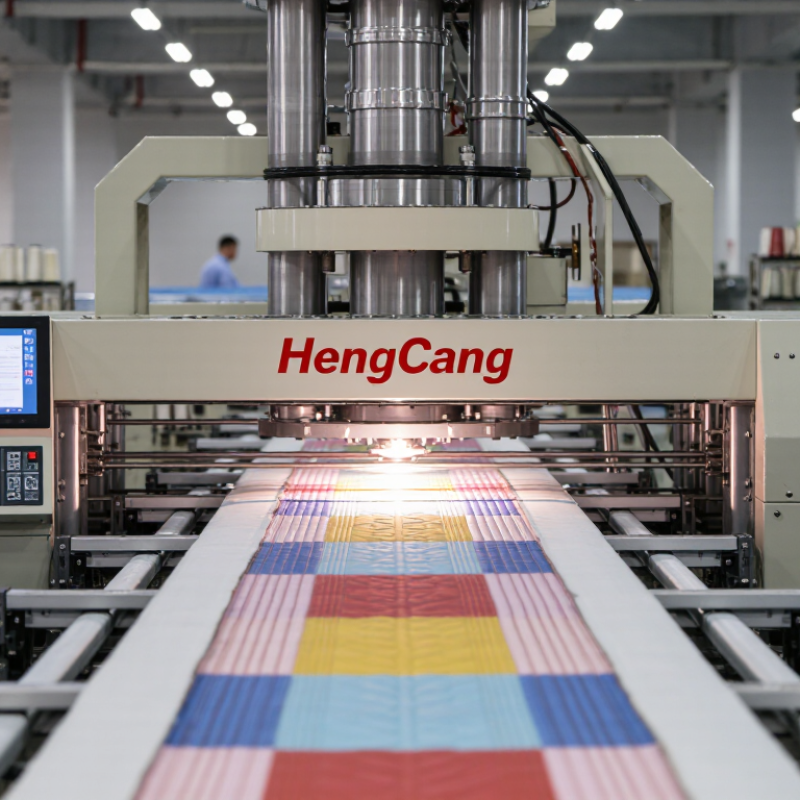
| Production capacity | Stitch speed, measured in stitches per minute | Confirm the rated speed and the speed the machine can maintain on the intended pattern and material stack. | Rated speed alone does not determine finished-unit output; pattern complexity and handling time also matter. |
| Output planning | Estimated units per hour | Estimate: usable stitches per hour ÷ stitches required per item. Adjust for setup, loading, trimming, and quality checks. | Provides a more realistic planning figure than maximum machine speed alone. |
| Working area | Maximum quilting field or usable frame size | Check that the usable area accommodates the largest product and the planned pattern without repositioning. | A suitable working area can reduce repositioning and support consistent pattern placement. |
| Layer handling | Fabric layers, batting, and total stack thickness | Test the actual fabric-and-batting combination; confirm feeding, presser-foot clearance, stitch formation, and consistent layer movement. | Successful testing helps identify shifting, skipped stitches, or uneven feeding before production. |
| Cotton and cotton blends | Woven face fabrics and linings | Check needle and thread selection, fabric weight, stitch quality, and whether layers feed evenly. | A representative trial helps establish settings for repeatable quilting. |
| Polyester and synthetic fabrics | Synthetic woven or knitted layers | Check for puckering, heat sensitivity, skipped stitches, and smooth feeding at the intended operating speed. | Material-specific testing can reveal whether adjustments to settings or stabilisation are needed. |
| Batting and lofted fills | Polyester, cotton, or blended batting | Test the chosen loft and stack thickness for compression, stitch formation, and reliable movement through the machine. | The result depends on the combined quilt stack, not on the face fabric alone. |
| Product changeover | Setup time between patterns, sizes, or materials | Record changeover time during a trial, including pattern loading, alignment, and setup adjustments. | Shorter, repeatable changeovers can improve effective capacity when producing varied orders. |
| Quality and uptime | First-pass quality, stoppages, and maintenance needs | Track accepted items, rework, interruptions, and routine maintenance during a representative production run. | Consistent quality and dependable operation affect saleable output and delivery planning. |



 Close