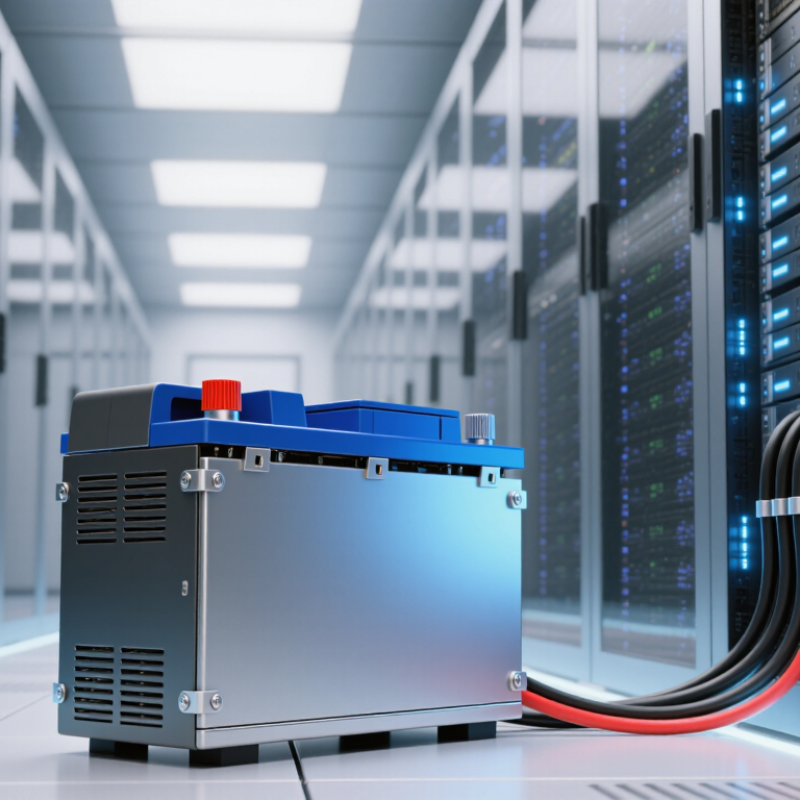
| Data Centers and Server Rooms | 10 kVA to multi-megawatt systems | Servers, storage equipment, network switches, cooling controls and security systems | High energy density can reduce battery-room space; long service life can support frequent power cycling and reduce replacement logistics | Ride through short outages and provide time for orderly shutdown or generator transfer | Redundancy, battery monitoring, thermal management, ventilation requirements and coordination with generators |
| Telecommunications and Network Infrastructure | 1 kVA to 500 kVA per site or equipment room | Routers, switches, radio equipment, transmission systems and remote cabinets | Compact installation supports space-limited sites; low maintenance is useful for distributed and difficult-to-access locations | Maintain communications during utility interruptions until backup generation or alternate power is available | Wide operating-temperature capability, remote monitoring, enclosure protection and service access |
| Healthcare Facilities | 5 kVA to 1 MVA or more, depending on the load | Patient-monitoring equipment, imaging support systems, laboratory equipment and essential IT systems | Fast response and stable power help protect sensitive electronic equipment; reduced maintenance can support critical facilities | Prevent interruptions to essential loads and support transfer to emergency power | Compliance with applicable electrical and healthcare requirements, isolation, redundancy and battery safety controls |
| Industrial Automation and Manufacturing | 3 kVA to 500 kVA | Programmable logic controllers, industrial computers, control networks, sensors and process instrumentation | Helps prevent control-system resets, production interruptions and data loss caused by voltage disturbances | Provide ride-through power long enough for process stabilization, controlled shutdown or generator startup | High inrush loads, dust, vibration, ambient temperature, harmonics and coordination with motor-driven equipment |
| Commercial Buildings and Office IT | 1 kVA to 300 kVA | Workstations, servers, access-control systems, communication equipment and building-management controls | Smaller footprint and reduced routine battery maintenance can simplify installation in equipment rooms | Protect business operations and allow safe shutdown during short outages | Load prioritization, expansion capacity, noise limits, fire-safety requirements and lifecycle planning |
| Retail, Banking and Point-of-Sale Systems | 1 kVA to 100 kVA per location | Payment terminals, transaction servers, security systems, networking equipment and self-service kiosks | Compact systems can fit in branch or store environments while supporting reliable operation of electronic transactions | Avoid transaction interruption and preserve network connectivity during brief outages | Distributed monitoring, physical security, surge protection, battery replacement planning and local electrical codes |
| Transportation and Traffic Infrastructure | 1 kVA to 250 kVA | Traffic signals, tunnel controls, railway communication systems, ticketing equipment and monitoring devices | Longer service intervals and compact cabinets are beneficial for remote roadside and transportation installations | Keep safety-related and communication systems operating until utility power returns or standby power starts | Outdoor temperature range, moisture protection, shock and vibration resistance, remote alarms and emergency procedures |
| Renewable Energy and Microgrids | 5 kVA to several megawatts | Inverters, energy-management systems, protection controls and selected critical loads | Suitable for applications requiring repeated charge and discharge cycles when the battery system is correctly sized and managed | Bridge renewable intermittency, support islanding controls and maintain power quality for priority loads | Depth of discharge, cycle profile, inverter compatibility, state-of-charge limits, thermal control and fire protection |
| Residential and Small-Business Backup | 500 VA to 20 kVA | Networking equipment, computers, home medical devices, security systems and selected appliances | Quiet operation, compact installation and reduced routine maintenance can improve convenience for users | Maintain essential electronics and provide time for safe shutdown or switching to another power source | Correct load calculation, indoor installation conditions, user safety, ventilation and compatibility with sensitive electronics |



 Close
Close