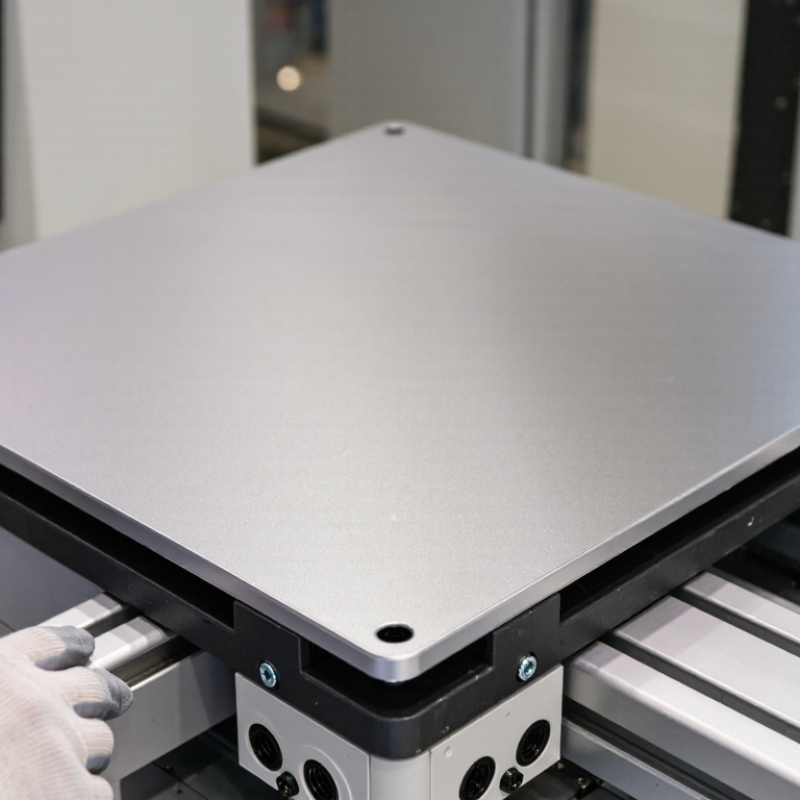
| Definition | A sheet metal top cover is a formed panel installed over the upper side of an enclosure, machine, cabinet, or equipment assembly. | It provides a physical barrier and can help protect internal components from contact, dust, or incidental splashes, depending on its design and sealing. |
| Common Materials | Carbon steel, stainless steel, and aluminum are commonly used. Material choice depends on strength, weight, corrosion exposure, appearance, and cost. | The right material helps balance durability, environmental resistance, and fabrication requirements. |
| Typical Thickness | For many light- to medium-duty fabricated covers, sheet thicknesses around 0.8–2.0 mm are used. Actual specifications vary with panel size, material, support, and load requirements. | Thickness affects stiffness, weight, forming effort, and resistance to dents. It should be selected for the application rather than treated as a universal standard. |
| Typical Processes | Manufacturing may include shearing or laser cutting, punching, press-brake bending, joining, deburring, and surface finishing. | These processes can produce repeatable shapes, folded edges, mounting features, and openings for a range of enclosure designs. |
| Protection and Fit | A cover can shield internal parts from accidental contact and some environmental exposure. Seams, gaskets, fasteners, and edge geometry determine how well it fits and seals. | A sheet metal cover is not automatically waterproof or dust-tight; protection depends on the complete enclosure design and applicable test requirements. |
| Structural Design | Bends, flanges, hems, ribs, and support points can increase rigidity without relying only on thicker material. | Thoughtful geometry can reduce flexing and help the cover maintain alignment during installation and use. |
| Surface Finish | Depending on the material and environment, finishes may include paint, powder coating, plating, or passivation for stainless steel. | A suitable finish can improve appearance and corrosion resistance; finish selection should account for handling, cleaning, and service conditions. |
| Common Applications | Electrical enclosures, control cabinets, machinery housings, instrument cases, and equipment guards. | The cover can be tailored with mounting holes, access openings, ventilation features, and edges suited to the equipment. |
| Key Design Checks | Confirm dimensions, clearances, material and thickness, edge safety, mounting method, ventilation needs, finish, and required environmental protection. | Checking these details early helps ensure the cover fits the assembly and performs as intended. |



 Close