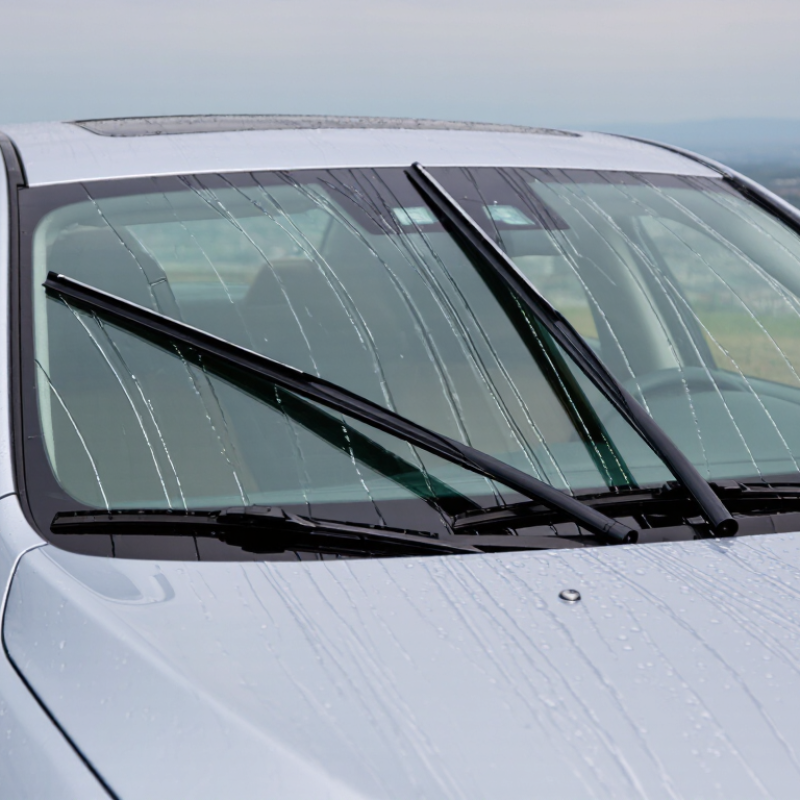
| Water-Shedding Behavior | Silicone can leave a thin, water-repellent film on the glass as it wipes. | Primarily removes water without intentionally creating a hydrophobic surface layer. | Rainwater may bead and move away more quickly, improving visibility during moderate rainfall. |
| Resistance to UV and Ozone | Silicone generally has strong resistance to ultraviolet radiation, ozone, and weathering. | Rubber compounds can gradually harden, crack, or lose flexibility after prolonged UV and ozone exposure. | Better resistance to outdoor aging can help maintain wiping quality in sunny or high-altitude environments. |
| Temperature Flexibility | Silicone remains flexible across a broad temperature range; many silicone rubber grades are designed for approximately −50°C to 200°C service, depending on formulation. | Temperature capability varies by rubber formulation; cold weather can increase stiffness and heat can accelerate aging. | More consistent contact with the windshield in both cold mornings and hot climates. |
| Flexibility Retention | Typically retains elasticity well after exposure to sunlight, moisture, and temperature changes. | May become brittle, swollen, or permanently deformed as the compound ages. | Helps reduce missed areas, streaks, and skipping caused by an aged wiping edge. |
| Noise and Chatter | A flexible silicone wiping edge can operate quietly when correctly matched to the glass and arm pressure. | Noise may increase when rubber hardens, the windshield is contaminated, or the blade angle is incorrect. | Potentially smoother and quieter wiping, especially during light rain. |
| Performance with Road Contaminants | Silicone surfaces can resist some adhesion from water and road film, but cleaning is still required. | Rubber edges can collect oil, dust, salt, and washer-fluid residue over time. | May reduce the frequency of visible smearing, provided the windshield is kept clean. |
| Service-Life Factors | Often offers good resistance to weather-related deterioration, although the edge can still wear from dirt, ice, and dry wiping. | Wear is more strongly affected by UV exposure, ozone, temperature cycling, and repeated contact with contaminants. | May support longer-lasting wiping performance, but replacement timing should be based on actual blade condition. |
| Cold-Weather Use | Generally maintains flexibility better than many standard rubber compounds at low temperatures. | Can stiffen in freezing conditions, particularly when the blade is aged or contaminated. | Improved contact can help limit streaking and skipping in winter conditions. |
| Maintenance Requirement | Should be wiped clean regularly and inspected for cuts, tears, deformation, or uneven contact. | Requires the same basic maintenance, with more frequent inspection when exposed to harsh weather. | Regular cleaning and inspection are essential regardless of blade material. |
| Important Limitation | Performance depends on blade design, glass condition, spring pressure, fitment, and installation quality. | A high-quality rubber blade can still perform well when properly fitted and maintained. | Material alone does not guarantee superior wiping; vehicle compatibility and maintenance remain decisive. |



 Close