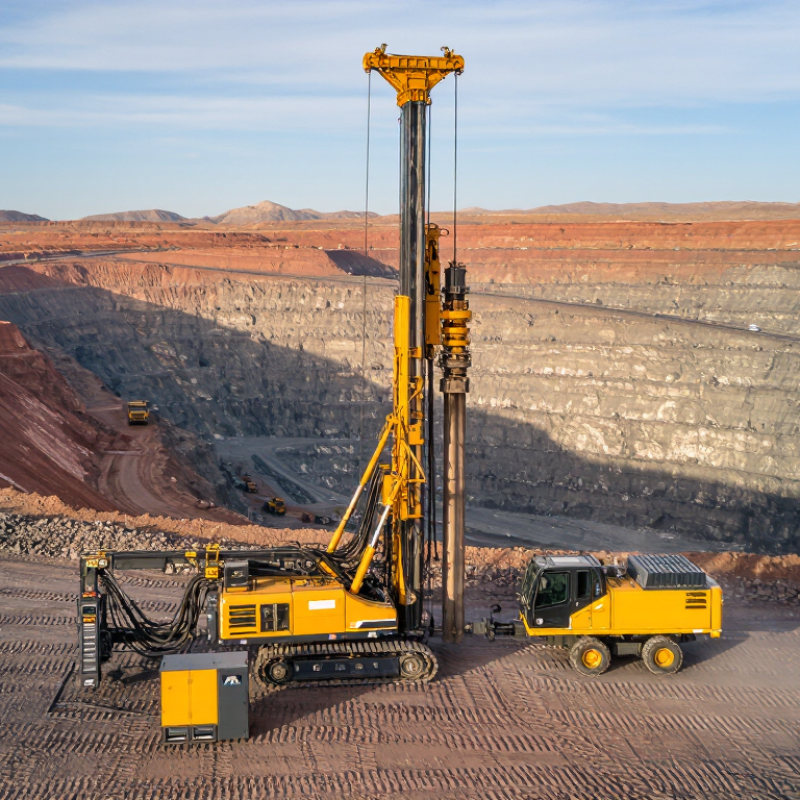
Choosing a surface drilling rig is often a cost decision, not simply an equipment decision. Fuel is only one part of the calculation. On a limestone bench, daily fuel records can reveal large differences between idle time, drilling time, and relocation time. A rig that drills steadily may consume more fuel per hour but less fuel per metre.
Consumables can change the result quickly. Drill rods, bits, shank adapters, lubricants, and compressor filters need regular tracking. Hard, fractured ground may shorten bit life and increase replacement costs. Wet holes can also raise air consumption and create more maintenance work. These details are easy to miss. They should not be.
Maintenance costs include planned servicing, spare parts, technician hours, and lost production. A simple service schedule reduces surprises, but it cannot remove them. Dust, vibration, and poor bench access still damage components. Keeping service records helps identify repeated failures and realistic operating costs. Some estimates look precise but remain incomplete.
Cost per metre should combine fuel, consumables, maintenance, labor, and downtime, then divide them by drilled metres. This measure compares rigs more fairly than hourly fuel use. For example, a higher hourly cost may be acceptable when penetration is faster and breakdowns are fewer. However, ground conditions can change the answer next month. Review the figures by rock type, shift, and hole depth before making a purchase decision.



 Close