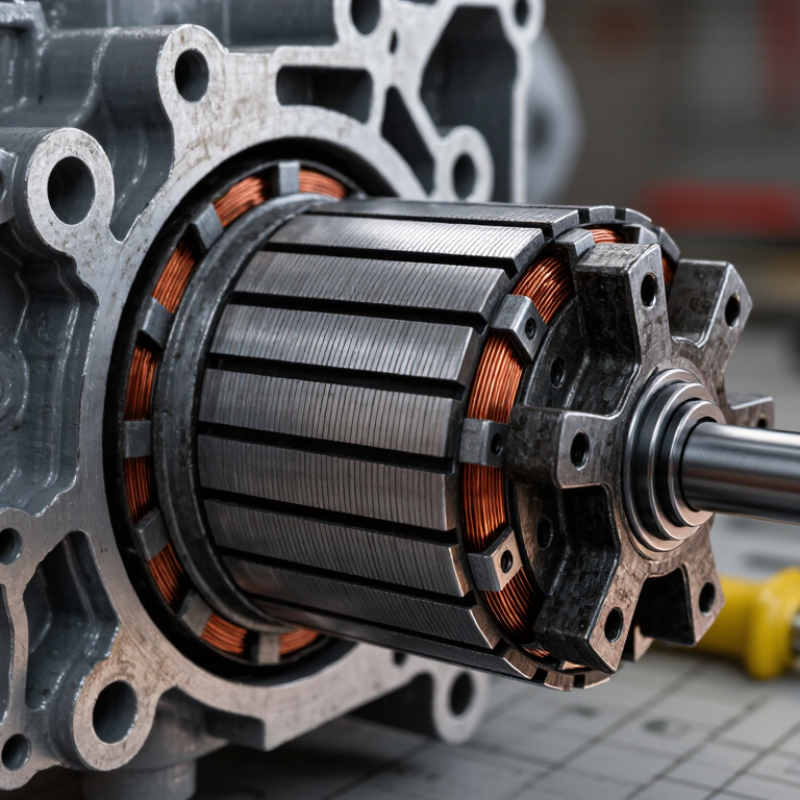
| Brush wear and loss of spring pressure | Worn brushes or weak brush springs reduce consistent contact with the commutator segments, increasing resistance and arcing. | Intermittent pump operation, difficult starting, or a pump that stops unexpectedly. | Check pump power and ground during the failure. If the pump is accessible for inspection, look for short brushes, weak springs, or uneven wear. |
| Electrical arcing and pitted segments | Poor brush contact, excessive current, or a winding fault can cause arcing that pits or burns the copper contact surface. | Rough or fluctuating pump operation, increased electrical noise, and eventually loss of motor operation. | Inspect for darkened, pitted, or burned segments. Compare current draw with the vehicle service specification and check for circuit faults. |
| Contamination or corrosion | Moisture, debris, or conductive deposits can interfere with the brush-to-commutator contact and accelerate surface wear. | Unsteady pump output, intermittent starting problems, or premature pump failure. | Check electrical connectors and the pump assembly for corrosion or contamination. Follow the vehicle manufacturer’s inspection and replacement guidance. |
| Excessive heat or high motor load | High current and heat can damage commutator surfaces, weaken brush contact, and contribute to insulation deterioration in the motor windings. | Reduced pump output, intermittent operation after heating, or a motor that fails to run. | Measure voltage at the pump under load and investigate abnormal current draw. Also check for restricted fuel flow or other conditions that may overload the pump. |
| Worn bearings or shaft misalignment | Excessive shaft movement can make brush contact uneven and cause localized wear on the commutator. | Abnormal pump noise, vibration, inconsistent delivery, or eventual motor seizure. | Listen for changes in pump noise and inspect for shaft play if the motor is serviceable. Confirm that the pump is correctly installed. |
| Open or shorted motor winding | A damaged winding can create uneven current through the commutator segments, leading to localized heating, arcing, or loss of continuity. | No pump operation, blown circuit protection, or unusually high or low current draw. | Test the pump circuit and motor current using the correct service procedure. Do not assume a failed pump until its power supply and ground have been checked. |
| Possible overall effects | Commutator damage can interrupt motor current or reduce pump performance. Depending on the severity, symptoms may include extended cranking, hesitation, stalling, loss of power, or a no-start condition. These symptoms can also result from other fuel, electrical, or engine faults, so diagnosis should include checks of pump voltage, ground, fuel pressure, and related circuits. |



 Close