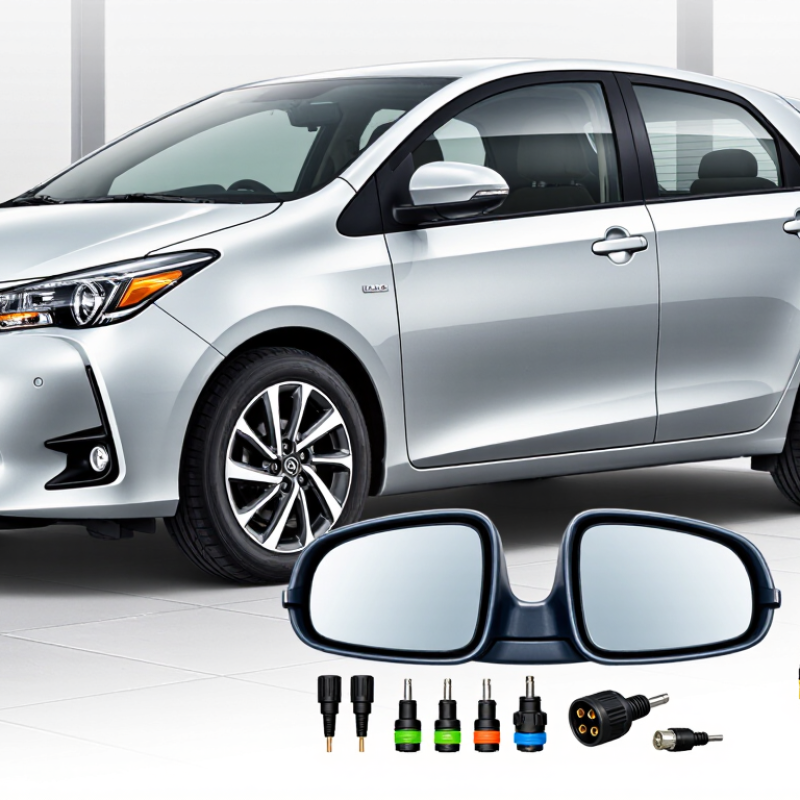
| Model year and generation | Confirm the vehicle’s production year and generation using its registration documents or vehicle identification number (VIN). | Yaris generations overlap in some markets, and a model year alone may not identify the correct mirror assembly. | Compare the vehicle’s year, body style, and market with the seller’s application listing. Treat broad year ranges as a starting point, not a fitment guarantee. |
| Market and model identity | Check the country or region where the vehicle was originally sold and confirm its exact model designation. | Vehicles carrying the same name in different markets can use different platforms, body shells, or mirror assemblies. | Use the VIN or a market-specific parts catalogue where available. Do not rely on the model name alone. |
| Body style and door configuration | Identify whether the vehicle is a hatchback, sedan, or another body style, and note its door configuration. | Mirror bases, mounting angles, and door trim can differ between body versions, even within a similar year range. | Compare the existing mirror’s mounting area and door profile with clear photographs of the replacement. |
| Mounting base and bolt pattern | Compare the mirror’s triangular mounting base, bolt count, bolt spacing, and locating tabs. | A similar-looking housing will not fit securely if the base shape or mounting points differ. | Remove the interior trim only if appropriate, then compare the mounting points with the replacement specifications or the original part. |
| Left-hand or right-hand side | Confirm the required side from the vehicle’s direction of travel: left-hand mirror or right-hand mirror. | Side-specific assemblies are not interchangeable. Driver and passenger positions also vary with steering configuration. | State the vehicle’s steering position and the required vehicle side when ordering; do not identify the side only by where you stand outside the car. |
| Steering position and mirror shape | Check whether the vehicle is left-hand drive or right-hand drive, and compare the mirror housing and viewing angle. | Market-specific mirror geometry and glass specifications may differ to provide the intended field of view. | Match the original assembly’s side, shape, and market application. Confirm any glass or visibility specification required for the destination market. |
| Electrical connector | Compare connector shape, pin count, wiring, and any available wiring diagram or part specification. | Power adjustment, heating, folding, and signal functions may use different wiring and connectors. | Match the connector and functions exactly. A matching plug shape alone does not confirm that every electrical function is compatible. |
| Mirror functions | Check for manual or power adjustment, heated glass, power folding, memory features, and an integrated turn signal. | Assemblies with different equipment levels may look alike but may not connect to the vehicle’s wiring or controls. | Compare the original mirror’s controls and features with the replacement’s stated equipment before purchase. |
| Glass and housing details | Check glass size and shape, convex or aspheric markings, blind-spot markings, housing finish, and any cap or cover requirements. | Glass and cover details can vary by market, trim, and safety specification even when the main housing appears similar. | Use photographs and part references to compare the complete assembly, not just the outer housing. |
| Part-number cross-check | Record the number on the original assembly, if available, and compare it with a verified replacement reference. | A matching or superseding part reference is stronger evidence than a general product title or visual resemblance. | Confirm the reference against the VIN and the correct market catalogue; ask the seller to verify unclear substitutions. |
| Installation and final test | After installation, test adjustment, folding, heating, indicator operation, and mirror stability where equipped. | Correct physical installation does not by itself confirm that all electrical features work properly. | Follow the vehicle’s repair instructions, protect wiring and trim, and check that the mirror provides a clear view before driving. |
| Global buyer checklist | Provide VIN or exact model code, production year, sales market, body style, steering position, side required, connector details, and mirror functions. | These details help distinguish similar-looking assemblies across generations and regional versions. | When any detail is uncertain, verify it with the original assembly or a qualified parts source before ordering. |



 Close