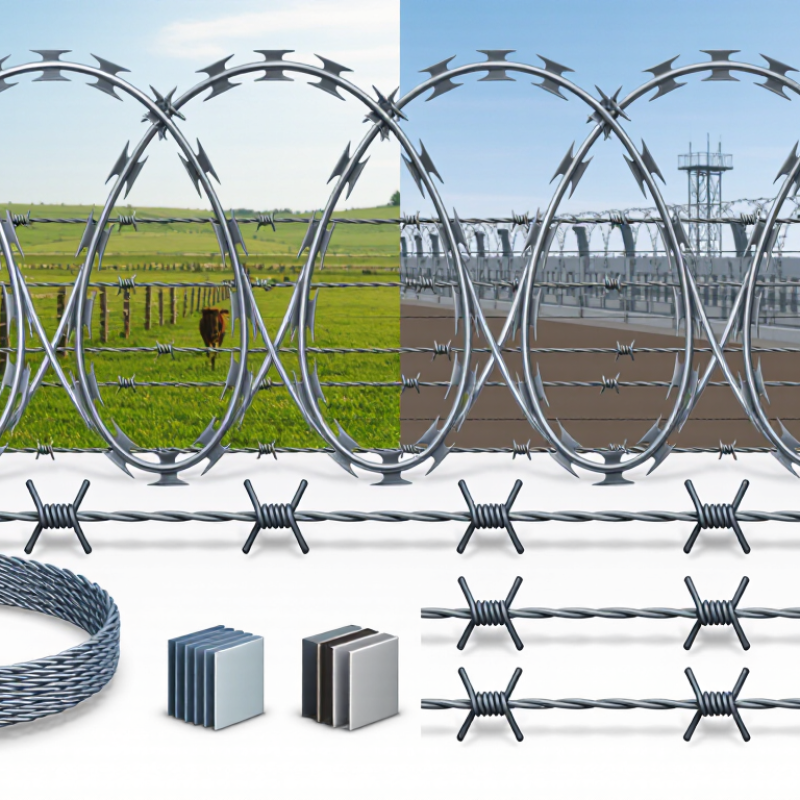
| Primary purpose | Marks boundaries and adds a physical deterrent to perimeter fencing around sites where access needs to be controlled. | Helps define field and property boundaries and can be incorporated into fencing for livestock management. | Buyers consider the site’s purpose, required boundary coverage, access points, and the type of existing fence. |
| Typical settings | Perimeters of industrial properties, storage areas, utility sites, and other restricted-access locations. | Ranches, farms, pastures, and other rural properties with land or livestock boundaries to manage. | Site area, terrain, exposure to weather, and the availability of suitable posts and supporting fence materials. |
| Material and coating | Metallic-coated steel wire is commonly considered where outdoor exposure and corrosion resistance matter. | Coated steel wire may be selected for outdoor fences exposed to rain, soil moisture, and changing temperatures. | Wire construction and coating affect durability, handling, maintenance needs, and suitability for local conditions. |
| Product specifications | Purchases may specify wire gauge, tensile strength, barb spacing, and compatibility with the perimeter fence. | Specifications may reflect fence layout, intended livestock use, post spacing, and the number of fence lines. | Clear specifications help buyers compare products and plan installation; ASTM A121 covers metallic-coated carbon steel barbed wire. |
| Installation and upkeep | Correct tensioning, secure attachment, and regular inspection help maintain a functional perimeter barrier. | Installation must account for ground conditions, fence alignment, livestock management, and routine inspection. | Labor, tools, replacement needs, transport, and compatibility with existing fencing can influence the order size. |
| Why demand recurs | New perimeter projects, site changes, and repairs can create requirements for fencing materials. | New fencing, boundary adjustments, and repair of weather- or animal-damaged sections can prompt purchases. | Barbed wire is a physical fencing material, so demand is tied to installation, maintenance, and replacement needs rather than a single use. |
| Safety and compliance | Placement should account for access, warning requirements, and applicable local rules. | Fence design should consider animal welfare, people who may encounter the fence, and relevant local requirements. | Users should check applicable regulations and assess risks to people, livestock, and wildlife before installation. |



 Close