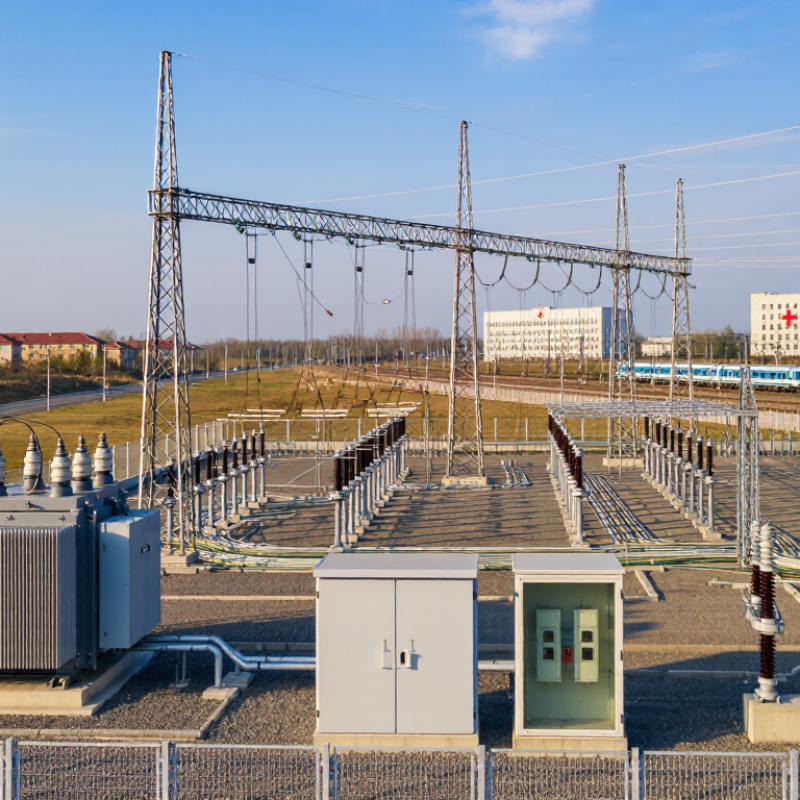
| Power transformer | Changes voltage levels so electricity can be transmitted and distributed safely and efficiently. | Overheating, insulation failure, and fire risk associated with damaged or overloaded equipment. | Temperature, oil condition where applicable, leaks, unusual noise, and signs of overheating. |
| Circuit breaker | Interrupts current when a fault occurs, isolating affected equipment or part of the network. | Electrical faults escalating into equipment damage, fire, or wider service interruptions. | Operating mechanism, trip operation, contact condition, and signs of wear or damage. |
| Protective relay | Detects abnormal electrical conditions and signals circuit breakers to disconnect the affected section. | Faults remaining energized and causing damage or unsafe conditions to persist. | Settings, event records, alarm status, and functional testing according to the maintenance plan. |
| Grounding system | Provides a path for fault current and helps limit dangerous voltage differences around substation equipment. | Electric shock from hazardous touch or step voltages during certain fault conditions. | Connections, corrosion, physical damage, and grounding-system test results. |
| Surge arrester | Limits voltage surges, such as those caused by lightning or switching, by diverting surge energy to ground. | Insulation damage and equipment failure caused by transient overvoltages. | Cracks, contamination, connection condition, and signs of discharge or deterioration. |
| Current and voltage transformers | Provide scaled electrical measurements for protection, monitoring, and control systems. | Incorrect fault detection or unsafe equipment operation caused by unreliable measurements. | Insulation condition, connections, leakage where applicable, and measurement or alarm abnormalities. |
| Fire detection and suppression systems | Identify fire conditions and support an appropriate response to protect people and limit damage. | Fire spreading to nearby equipment or creating additional hazards for workers and the public. | Detector and alarm operation, system availability, access, and inspection records. |
| Station batteries and DC supply | Provide backup power for protection, control, alarms, and breaker operation when normal station power is unavailable. | Protection or switching functions becoming unavailable during an outage or emergency. | Battery condition, charger operation, connections, alarms, and capacity-test results. |



 Close