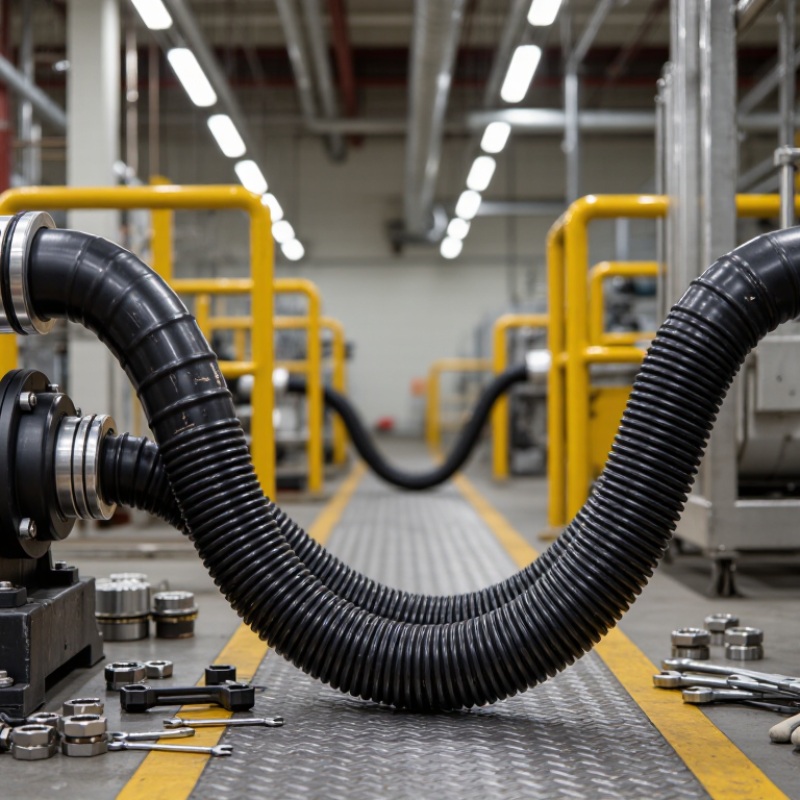
Rubber pipe hose handles vibration, movement, and changing temperatures better than rigid piping in many industrial settings. Its flexibility can reduce stress around pumps, valves, and machine connections. Yet flexibility does not remove risk. A damaged hose can fail suddenly under pressure.
ISO 1402 hydrostatic testing provides a controlled method for checking hose strength and assembly integrity. Technicians fill the hose with clean water and remove trapped air before pressurization. Air removal matters because compressed air can release dangerous energy during failure. Pressure should rise gradually with calibrated equipment and suitable protective barriers. No person should stand near the hose, couplings, or end fittings during the test. The test pressure and holding time must follow the applicable specification and hose requirements.
Inspectors should watch for leaks, abnormal swelling, cover separation, coupling movement, and permanent deformation. They should record the hose identification, test pressure, gauge details, duration, and observations. Maintenance continues after testing. Check for cuts, hardening, blistering, exposed reinforcement, crushed sections, and corroded fittings. Store hoses away from heat, sunlight, chemicals, and sharp edges. Small details matter.
A passing test does not guarantee safe service forever. Installation errors, repeated bending, and chemical exposure can shorten hose life. Field teams should review failures honestly, even when the test result looked acceptable. That reflection often reveals poor routing or neglected inspections.



 Close