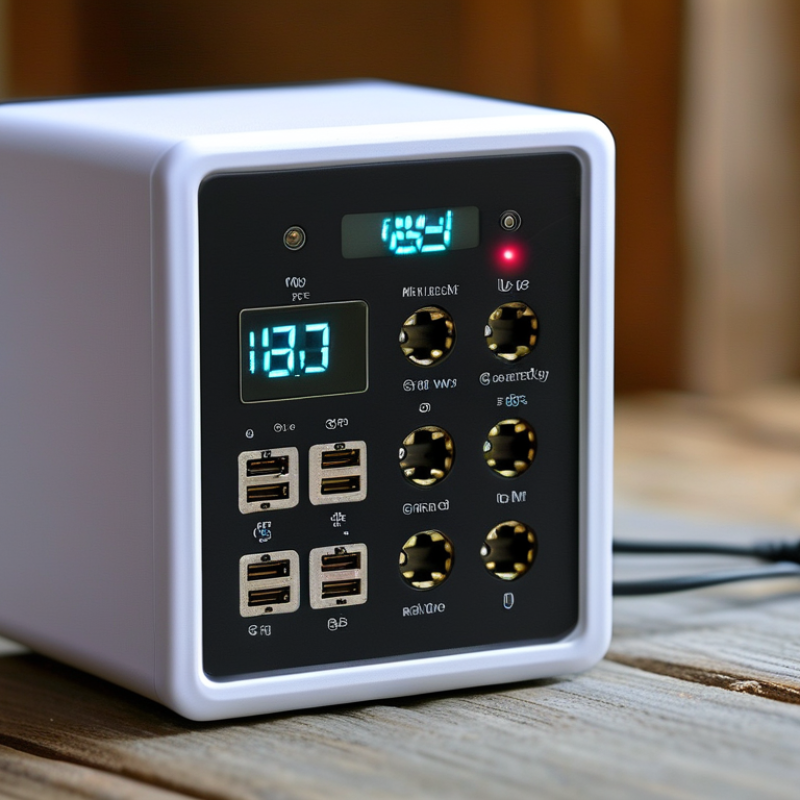
| Basic Definition | A mini UPS is a compact uninterruptible power supply that stores electrical energy and provides backup power when the normal power source fails. | It keeps a compatible router or optical network terminal powered during short power interruptions, helping maintain network connectivity. |
| Output Voltage | Common DC output levels include 5 V, 9 V, and 12 V. | The output voltage must match the router's required input voltage. A voltage mismatch may prevent operation or damage the equipment. |
| Output Current | Typical compact units provide approximately 1 A to 2 A on a selected output, depending on the design and operating mode. | The available current should be equal to or greater than the router's rated input current. The router draws only the current it needs under normal conditions. |
| Power Rating | Many small DC UPS units are designed for loads in the approximate range of 10 W to 24 W. | Calculate router power with the formula: Power (W) = Voltage (V) × Current (A). For example, a 12 V, 1 A router requires up to 12 W. |
| Input Power | The UPS normally receives power from an external AC adapter, which converts household AC electricity into low-voltage DC power. | During normal operation, the adapter powers the router and charges the internal battery at the same time. |
| Battery Type | Common battery technologies include lithium-ion and lithium-polymer cells. Some larger compact units use rechargeable lead-acid batteries. | Lithium-based batteries allow a smaller and lighter enclosure, while lead-acid batteries are generally heavier and may offer a lower energy density. |
| Battery Capacity | Capacity is commonly stated in watt-hours (Wh) or milliampere-hours (mAh). A typical small unit may store roughly 10 Wh to 40 Wh of energy. | Watt-hours provide a more useful comparison across different voltages. Battery energy can be estimated as: Wh = V × Ah. |
| Backup Runtime | Runtime depends on battery capacity, conversion efficiency, and connected load. A small UPS may provide approximately 1 to 8 hours for a low-power router. | For a 12 W load, a 24 Wh battery may theoretically provide 2 hours before losses. Practical runtime is shorter because of conversion and battery-discharge losses. |
| Power Conversion | A DC UPS may use power-management circuitry to charge the battery and regulate battery voltage to the selected output voltage. | Voltage regulation helps maintain a stable DC supply as the battery voltage changes during discharge. |
| Transfer During Outage | When the external DC input disappears, the UPS control circuit switches the load to battery power, often with a very short interruption. | A properly matched unit can reduce the chance that the router restarts during a brief outage. Actual transfer performance varies by design. |
| Charging Function | The built-in charging circuit replenishes the battery whenever external power is available. Charging time commonly ranges from several hours to overnight. | The router can usually remain connected while the battery is charging, provided the UPS supports simultaneous charging and load operation. |
| Protection Features | Common protections include overcharge, over-discharge, short-circuit, overcurrent, and input surge protection. | These features help protect the UPS and connected low-voltage equipment, but they do not replace a properly grounded surge-protection system for the entire electrical installation. |
| Output Connector | Barrel connectors are widely used for DC networking equipment. Some models also provide USB outputs for 5 V devices. | The connector size and polarity must match the router's original power adapter. A commonly used barrel plug size is 5.5 mm outer diameter with a 2.1 mm inner diameter, but it is not universal. |
| Polarity | Many networking power adapters use center-positive polarity, although this should never be assumed without checking the equipment label or adapter specification. | Incorrect polarity can prevent operation and may damage the router. Confirm the polarity symbol before connecting the UPS. |
| Typical Applications | Mini UPS units are used for WiFi routers, fiber terminals, modems, security cameras, access points, and other low-power DC devices. | They are most useful where short power cuts, unstable electricity, or accidental unplugging could interrupt internet access. |
| Key Compatibility Check | Verify output voltage, maximum current, connector dimensions, polarity, and total power consumption before use. | A UPS is suitable only when all electrical specifications match the router and any other connected device. |
| Main Limitation | A mini UPS supplies backup power but does not create an internet connection when the service provider's network or fiber equipment is offline. | If the modem, optical network terminal, or upstream network equipment also loses power, the router may remain on but internet access can still be unavailable. |



 Close
Close