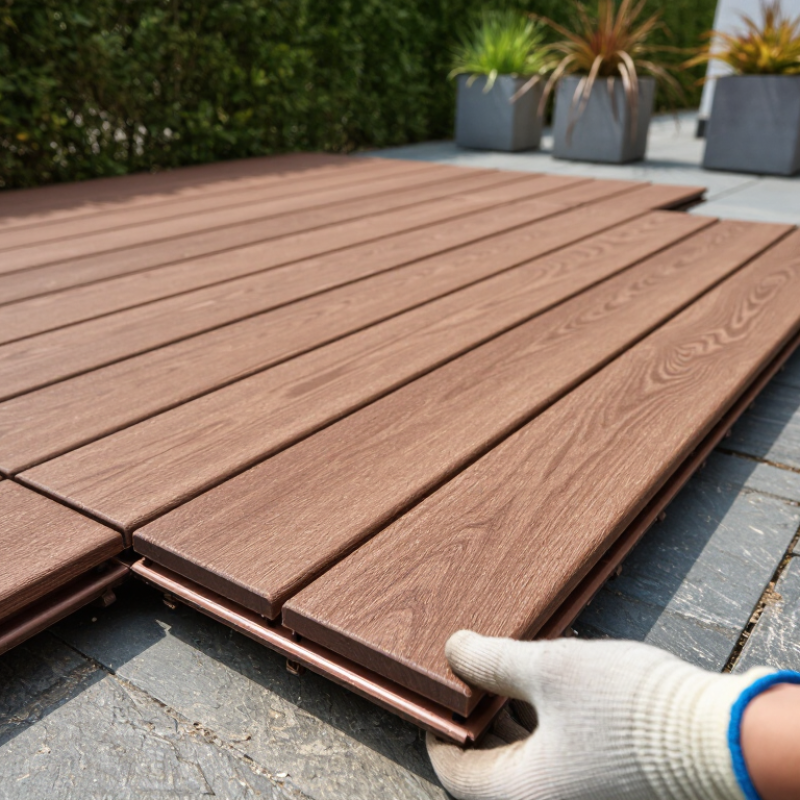
Compared with natural wood, WPC offers more consistent color and fewer splinters. Wood feels warmer and often looks more authentic, but it needs sealing, staining, and careful moisture control. Hardwood can last for years, although its price and responsible sourcing require attention. Pressure-treated softwood is cheaper, yet it may twist, split, or develop rough patches as it ages.
PVC decking generally handles moisture well and weighs less than WPC. Still, it can look more artificial and may expand noticeably with temperature changes. Aluminum decking provides excellent durability and fire resistance, but it can feel cold, sound hollow in rain, and cost more. WPC sits between these choices: less upkeep than wood, more natural texture than PVC, and lower cost than many metal systems.
Installation details matter. Leave the manufacturer’s expansion gaps, use proper joist spacing, and prevent standing water. I would not choose WPC solely from a color sample. Check heat exposure, drainage, local climate, and warranty terms first. Even then, performance can vary between batches. That deserves honest consideration.



 Close