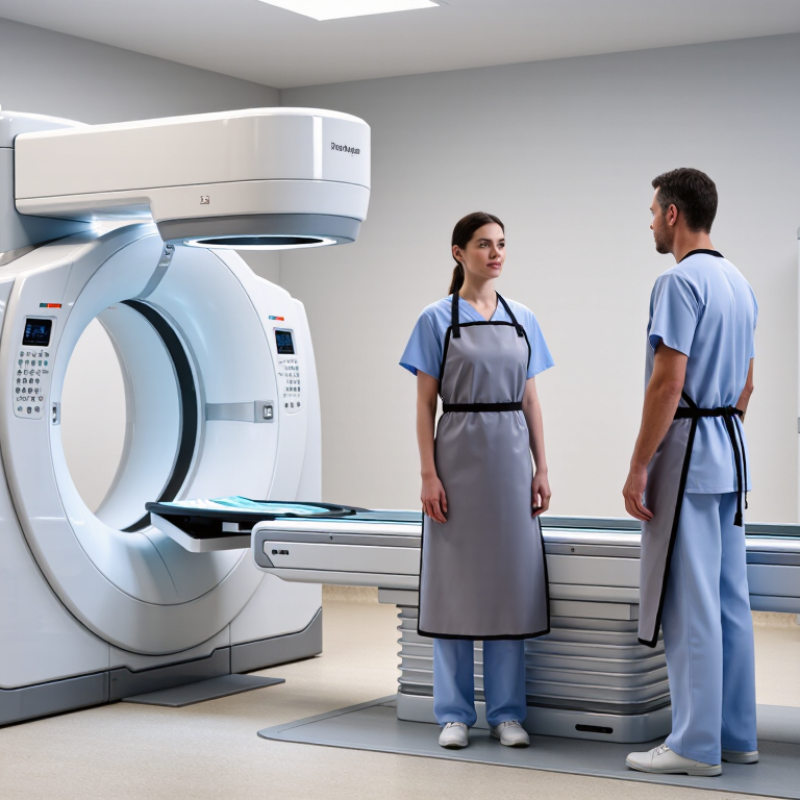
| Purpose of an apron | Provides attenuation of diagnostic X-rays to covered parts of the wearer’s body during relevant procedures. | Protection depends on the apron’s design, coverage, condition, beam quality, and the way it is used. | Use only where indicated by the facility’s radiation-protection procedures; an apron does not replace exposure controls or safe positioning. |
| Common applications | May be used by staff or patients when required for procedures involving diagnostic X-rays, including fluoroscopy and radiography. | Whether an apron is appropriate depends on the procedure, local rules, and the facility’s risk assessment. | Follow local protocols, especially for patient shielding, which may differ by procedure and jurisdiction. |
| Nominal lead equivalence | Aprons may be marked with a nominal lead-equivalent thickness, such as 0.25, 0.35, or 0.5 mm Pb. | These are examples of commonly encountered ratings, not a universal recommendation or a guarantee of protection in every situation. | Check the product label and choose equipment according to the procedure, applicable requirements, and facility guidance. |
| IEC 61331-3 testing | IEC 61331-3 addresses protective clothing, eyewear, and patient protective shields for diagnostic medical X-radiation. | Testing evaluates relevant protective characteristics, including attenuation or lead-equivalent performance, under specified test conditions. | Consult the applicable edition of the standard, product documentation, and procurement requirements when verifying conformity. |
| Visual check before use | A quick check can identify visible damage or problems with fit and fastenings. | Look for tears, cracked or brittle covering, loose seams, damaged closures, exposed protective material, or areas that no longer lie flat. | Do not use an apron with suspected damage until it has been assessed under the facility’s inspection procedure. |
| Periodic inspection | A documented inspection helps detect damage that may not be obvious during a brief visual check. | Inspection frequency should reflect the manufacturer’s instructions, use, storage conditions, and local requirements; there is no single interval suitable for every facility. | Record the inspection date, item identification, findings, and any repair, removal, or follow-up action. |
| Imaging-based inspection | Radiographic or other suitable imaging inspection can help assess internal defects in the protective material. | Review the full apron, including folds and seams, using a controlled method and the facility’s acceptance criteria. | Have results interpreted by trained personnel; remove an item from service if defects exceed the applicable criteria. |
| Storage and handling | Correct handling helps reduce avoidable damage to the protective material. | Repeated folding, crushing, or hanging from unsuitable supports can stress the apron and contribute to damage. | Store flat or on a suitable apron hanger, following the manufacturer’s care instructions. |
| After damage is suspected | Prompt assessment helps prevent continued use of equipment that may not provide its intended protection. | Visible defects, abnormal imaging findings, or uncertain condition require review against the relevant criteria. | Identify and quarantine the apron as needed; repair, return, or dispose of it according to manufacturer guidance and facility policy. |
| Important qualification | Testing and inspection support safe use but do not guarantee protection in every exposure scenario. | Acceptance limits, test methods, and inspection intervals can depend on the applicable standard, regulations, manufacturer, and facility policy. | Use current local requirements and product documentation rather than treating this table as a substitute for them. |



 Close