Our company only collects the necessary data and respects your privacy, in accordance with the General Law for the Protection of Personal Data 13.709/2018. By continuing, you confirm that you have read and accepted the Privacy Notice. Privacy Policy.

Medal Pt Br Medal Es

Medal Group

China Top 10 High Pressure Hydraulic Pump Manufacturers?

A High Pressure Hydraulic Pump must deliver steady flow under demanding loads, not just impressive pressure figures. In factories, construction equipment, and mobile machinery, pump choice affects cycle time, heat, noise, and maintenance needs. A unit that performs well on a test bench may behave differently in a dusty workshop or during long operating shifts. Details matter.

This guide introduces ten Chinese manufacturers for buyers comparing pump technologies, product ranges, and service capabilities. It considers practical factors such as pressure and flow ratings, compatible fluids, control options, materials, testing procedures, and access to spare parts. These points help readers frame useful questions before requesting a quotation. A supplier’s current datasheet and written technical advice should take priority over broad marketing claims.

A ranked list can look precise, yet manufacturer capabilities and product lines change. Treat this selection as a starting point, not a guarantee that one company suits every system. Confirm operating conditions, installation limits, warranty terms, and delivery expectations directly with each supplier. Ask for evidence relevant to the intended application, such as test records or quality certifications. Specifications can be incomplete. That is worth checking. By comparing verified details alongside technical support and service availability, buyers can make a more informed shortlist and reduce avoidable mismatches.

China Top 10 High Pressure Hydraulic Pump Manufacturers?

Understanding High-Pressure Hydraulic Pumps and Their Main Types

High-pressure hydraulic pumps turn mechanical input into fluid flow, while system resistance creates pressure. “High pressure” has no single universal cutoff; check the machine’s operating range and duty cycle. A pump rated for brief peaks may not withstand that pressure continuously.

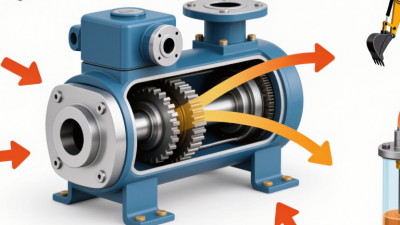
The main designs are gear, vane, and piston pumps. Gear pumps are compact and tolerate demanding work, but can be noisier. Vane pumps often run smoothly at moderate pressures. Axial-piston pumps offer adjustable displacement and suit high-pressure systems; radial-piston designs can deliver very high pressure at lower speeds.

Grand View Research estimated the global hydraulic pump market at USD 10.26 billion in 2022, projecting 4.8% compound annual growth from 2023 to 2030. The estimate reflects broad demand, not performance guarantees for any pump type.

Tips: Check continuous and peak pressure separately. Keep fluid clean, and confirm viscosity and temperature limits. Small details matter. I would not choose by pressure rating alone; noise, control response, and maintenance access can change the best fit.

How China’s Hydraulic Pump Manufacturing Industry Is Structured

China’s high-pressure hydraulic pump industry is not a single, uniform factory network. It includes pump makers, component specialists, machining shops, seal suppliers, testing facilities, and distributors. Some manufacturers focus on gear pumps for straightforward circuits; others produce piston pumps for systems requiring precise pressure and flow control. Regional clusters can offer quick access to casting, heat treatment, and precision grinding. Nearby suppliers can help, but location alone does not prove consistent quality.

A useful top-ten comparison should look beyond catalog pressure ratings. Check whether a manufacturer controls critical processes, records endurance tests, and clearly states operating limits for noise, temperature, and oil cleanliness. Request performance curves tied to a specified speed and oil viscosity. A pump may reach its rated pressure briefly yet perform differently after hours of operation. Supplier size is only one clue. This distinction is easy to miss, even when product data looks thorough.

Tips: Ask for test records and clarify who handles service and replacement parts. Compare pumps under the same operating conditions. Details matter. Some factories may provide limited public data, so verify claims directly and treat unexplained gaps as a reason to ask more questions.

Profiles of 10 Chinese High-Pressure Hydraulic Pump Manufacturers

Profiles of 10 Chinese High-Pressure Hydraulic Pump Manufacturers

A useful profile compares more than advertised maximum pressure. It examines pump type, displacement range, operating speed, materials, test records, and service support. For ten Chinese manufacturers, these details help buyers distinguish equipment designed for mobile machinery from pumps intended for industrial systems. Avoid treating a “top ten” list as a verified ranking unless its selection method is disclosed.

Grand View Research’s Hydraulic Pump Market report estimates global market growth at a 4.5% compound annual rate from 2024 to 2030. This is a worldwide forecast, not a measure of Chinese manufacturers’ sales. Still, it points to sustained demand across sectors such as construction and manufacturing. When reviewing each company, check whether performance figures refer to continuous or peak pressure. A brief catalog entry may omit this distinction. Comparisons can be uneven.

Tips: Ask for a test report showing pressure, flow, speed, and oil temperature. Check the stated cleanliness requirements against ISO 4406. Request references for similar working conditions, then confirm spare-part availability and warranty terms in writing.

China Top 10 High Pressure Hydraulic Pump Manufacturers? - Profiles of 10 Chinese High-Pressure Hydraulic Pump Manufacturers

Technical reference table: the entries below describe common hydraulic pump technologies, not verified profiles or rankings of individual manufacturers. Pressure bands are indicative industry ranges; actual ratings depend on the pump model, operating conditions, and manufacturer specifications.

Profile Pump technology Indicative operating-pressure band Typical characteristics Common applications
01 Variable-displacement axial piston, swash-plate design Commonly about 250–350 bar Displacement can be adjusted; supports efficient flow and pressure control. Mobile machinery, injection-molding equipment, and industrial hydraulic systems.
02 Fixed-displacement axial piston, swash-plate design Commonly about 250–350 bar Delivers a set displacement per shaft revolution; control is generally handled elsewhere in the circuit. Hydraulic power units, presses, and machinery requiring steady pump output.
03 Bent-axis axial piston Some designs operate around 350–450 bar Piston-and-cylinder geometry is angled relative to the drive shaft; available as fixed- or variable-displacement designs. High-pressure mobile hydraulics and demanding industrial drives.
04 Radial piston Some designs operate around 400–700 bar Can provide high pressure at relatively low speed; pressure capacity is strongly design-dependent. Clamping, pressing, test equipment, and other high-force applications.
05 External gear High-pressure models commonly fall around 200–300 bar Compact, comparatively simple construction; fixed displacement is typical. Construction machinery, agricultural equipment, and general hydraulic power units.
06 Internal gear Some designs operate around 250–315 bar Often selected for smooth flow and relatively low noise; performance varies with design and fluid. Machine tools, industrial power units, and noise-sensitive hydraulic installations.
07 Balanced vane Commonly about 140–210 bar Typically produces smooth flow and moderate noise; generally suited to lower pressure than piston pumps. Industrial machinery and systems where smooth delivery is important.
08 Twin-screw hydraulic pump Application-dependent; commonly used below piston-pump pressure levels Can provide low-pulsation flow; suitability depends on fluid properties and the pump’s intended service. Specialized industrial fluid-transfer and hydraulic applications.
09 Multi-piston pump Model-dependent; high-pressure versions may exceed 300 bar Multiple pumping elements contribute to flow; construction and pressure ratings vary by configuration. Special-purpose power units, hydraulic testing, and high-force equipment.
10 Pump-and-motor electro-hydraulic package Set by the selected pump and system design An assembled unit rather than a separate pump principle; may combine a pump, motor, reservoir, and controls. Compact machinery, lifting systems, and custom industrial hydraulic circuits.

Comparing Manufacturers by Products, Applications, and Capabilities

A useful comparison of China’s high-pressure hydraulic pump manufacturers starts with product fit, not catalogue size. Axial-piston pumps suit compact excavators and mobile equipment requiring variable flow; gear pumps often fit simpler, cost-sensitive circuits. For each supplier, check rated pressure, displacement range, speed limits, control options, and performance under heat and contamination. Ask for test curves, not just maximum-pressure claims.

That matters.

Application demand gives context. The China Construction Machinery Association reported 195,018 excavators sold by 26 major manufacturers in 2023, including domestic sales and exports. This points to a substantial equipment base, but it does not prove every pump supplier serves excavators. Buyers should verify operating duty, service access, spare-parts lead times, and compatibility with the machine’s hydraulic circuit.

Capability comparisons should include machining consistency, endurance testing, cleanliness control, and engineering support for integration. Request test conditions and failure criteria; figures without these details are hard to compare. A tidy scorecard can still mislead. Published specifications rarely show how a pump behaves after months of pressure cycling, and that gap deserves attention. For a shortlist, compare documented test evidence with field references from similar working conditions, rather than relying on broad claims of quality or capacity.

Factors to Consider When Selecting a Chinese Hydraulic Pump Manufacturer

China Top 10 High Pressure Hydraulic Pump Manufacturers?

Factors to Consider When Selecting a Chinese Hydraulic Pump Manufacturer

Selecting a hydraulic pump supplier means checking more than quoted pressure and price. Grand View Research estimated the global hydraulic pumps market at USD 10.68 billion in 2023, with projected growth through 2030. That outlook makes capacity and quality controls worth verifying, not assuming. Growth is not proof of reliability.

Ask for test curves showing flow, pressure, speed, and oil temperature. Compare these with your machine’s duty cycle, then request test records for the pump model under consideration. Check the factory’s material traceability, machining tolerances, and inspection process. For systems sensitive to contamination, discuss oil cleanliness using ISO 4406 codes. Small details matter. Confirm warranty terms, spare-part lead times, and who handles technical questions after shipment. A video call can show a test bench, but it cannot replace documented results or an independent inspection. I would also test a sample under realistic load; this adds time and cost, and not every buyer can do it. Still, a polished catalogue is no substitute for measured performance.